Ever heard a mysterious ticking from your engine and wondered, "Is that my lifters or an exhaust leak?" You're not alone. These two problems sound surprisingly similar at first, but mixing them up can cost you hundreds—or even thousands—of dollars in wrong repairs.
Here's the thing: lifter tick comes from inside your engine where the valve train lives, while exhaust leaks happen outside where hot gases escape. One might cost you $200 to fix, the other could run $1,500. Big difference, right?
The good news? Once you know what to listen for, telling them apart is actually pretty straightforward. Let's break down the key differences so you can diagnose the problem yourself before heading to the mechanic.

What Does Lifter Tick Sound Like?
Think of lifter tick as a fast, metallic tap-tap-tap coming from the top of your engine. It's like someone rapidly tapping a wrench on metal—sharp, rhythmic, and perfectly synced with your engine speed.
The Tell-Tale Signs
Rev your engine and the ticking speeds up proportionally. Drop back to idle and it slows down. This perfect synchronization is your biggest clue. The sound comes from under the valve cover where your hydraulic lifters live.
Here's a quirk: lifter tick is usually loudest when you first start your car on a cold morning. Give it 5-10 minutes to warm up, and it often quiets down or even disappears. That's because cold, thick oil takes time to fill the lifters properly. If the ticking stays constant hot or cold, you're looking at actual wear rather than just an oil flow issue.
What Does an Exhaust Leak Sound Like?
Exhaust leaks sound more like "puff-puff-puff" or hissing—imagine air escaping from a tire, but rhythmic. It's breathy rather than metallic, and it comes from the side or bottom of your engine near the exhaust manifold.
How to Spot It
Here's the easiest test: carefully move your hand near the exhaust manifold (don't touch—it's hot!). Feel pulsing air? That's your leak. You might also spot black soot marks around the leak point, which is a dead giveaway.
Unlike lifter tick, exhaust leaks sound pretty much the same whether your engine is cold or hot. Sure, the metal might expand a bit when warm and close the gap slightly, but the difference is minimal. If your "ticking" doesn't change much with temperature, start looking at your exhaust system.
The Quick Comparison
What to Check | Lifter Tick | Exhaust Leak |
|---|---|---|
Sound | Sharp metallic tapping | Breathy puffing/hissing |
Where | Top of engine | Side/bottom near exhaust |
When Cold | Usually louder | Same as when hot |
When Warm | Often quieter | Still the same |
RPM Test | Speeds up perfectly with revs | Less precise correlation |
Feel Test | Nothing to feel | Air pulsing you can feel |
Visual Clue | Nothing visible | Black soot marks |
The Temperature Test (Most Reliable)
Start your car cold and listen. If the noise is loud but gets quieter after 5-10 minutes of warm-up, you're probably dealing with lifter tick. Exhaust leaks don't care about temperature—they sound the same all day long.
The Location Test
Grab a long screwdriver (or a mechanic's stethoscope if you're fancy). Touch the handle to your valve cover and listen through the other end. Sound gets way louder? Lifter tick. Now check near the exhaust manifold. Loudest there? Exhaust leak. Simple as that.
DIY Diagnosis in 4 Steps
Step 1: Look for Soot
Pop the hood and check your exhaust manifold and pipe connections. See black soot deposits? That's exhaust gas escaping—you've found your leak. No soot? Move to step 2.
Step 2: The Screwdriver Trick
With the engine idling, touch a long screwdriver handle to your valve cover and put your ear to the other end. Sound dramatically louder? That's lifter tick from inside. Now carefully check near the exhaust manifold (watch out—it's hot!). Loudest there? Exhaust leak.
Step 3: Rev It Up
Have someone slowly rev the engine while you listen. Lifter tick speeds up smoothly and proportionally—double the RPM, double the ticking speed. Exhaust leaks pulse faster too, but the rhythm is less precise and the sound stays breathy.
Step 4: The Cold Start Test
This is the money test. Start your car cold tomorrow morning and listen. After 10 minutes of warm-up, listen again. If the noise gets noticeably quieter, you've got lifter tick. If it sounds the same cold or hot, it's probably an exhaust leak.
What Will It Cost?
Here's where getting the diagnosis right really matters:
Exhaust Leak Repair: $150-500
Most exhaust leaks are pretty straightforward:
New manifold gasket: $150-400 (1-3 hours labor)
Exhaust pipe repair: $100-300 (1-2 hours labor)
Even a full manifold replacement: $300-800
Lifter Tick Repair: $50-2,200
This is where it gets expensive:
Mild cases (oil change + additives): $50-150
Full lifter replacement: $1,000-1,800 typically
Why so much? Because your mechanic needs 8-15 hours to tear down the engine, replace all the lifters, and put everything back together
Lifter replacement costs 3-5 times more than fixing an exhaust leak. Misdiagnose an exhaust leak as lifter tick, and you could waste $1,500 on the wrong repair. That's why the tests above are worth your time.
When to Call a Pro
If you've tried these tests and still aren't sure, don't guess. A mechanic's diagnostic fee ($80-150) is cheap insurance against a $1,500 misdiagnosis. They've got electronic stethoscopes, exhaust gas analyzers, and years of experience hearing these sounds.
Also call a pro if the sound is intermittent or seems to have characteristics of both problems—that's rare but it happens.
When you do need lifter replacement, quality matters. Companies like TOPU manufacture precision lifters that meet OEM specs without the dealership markup.
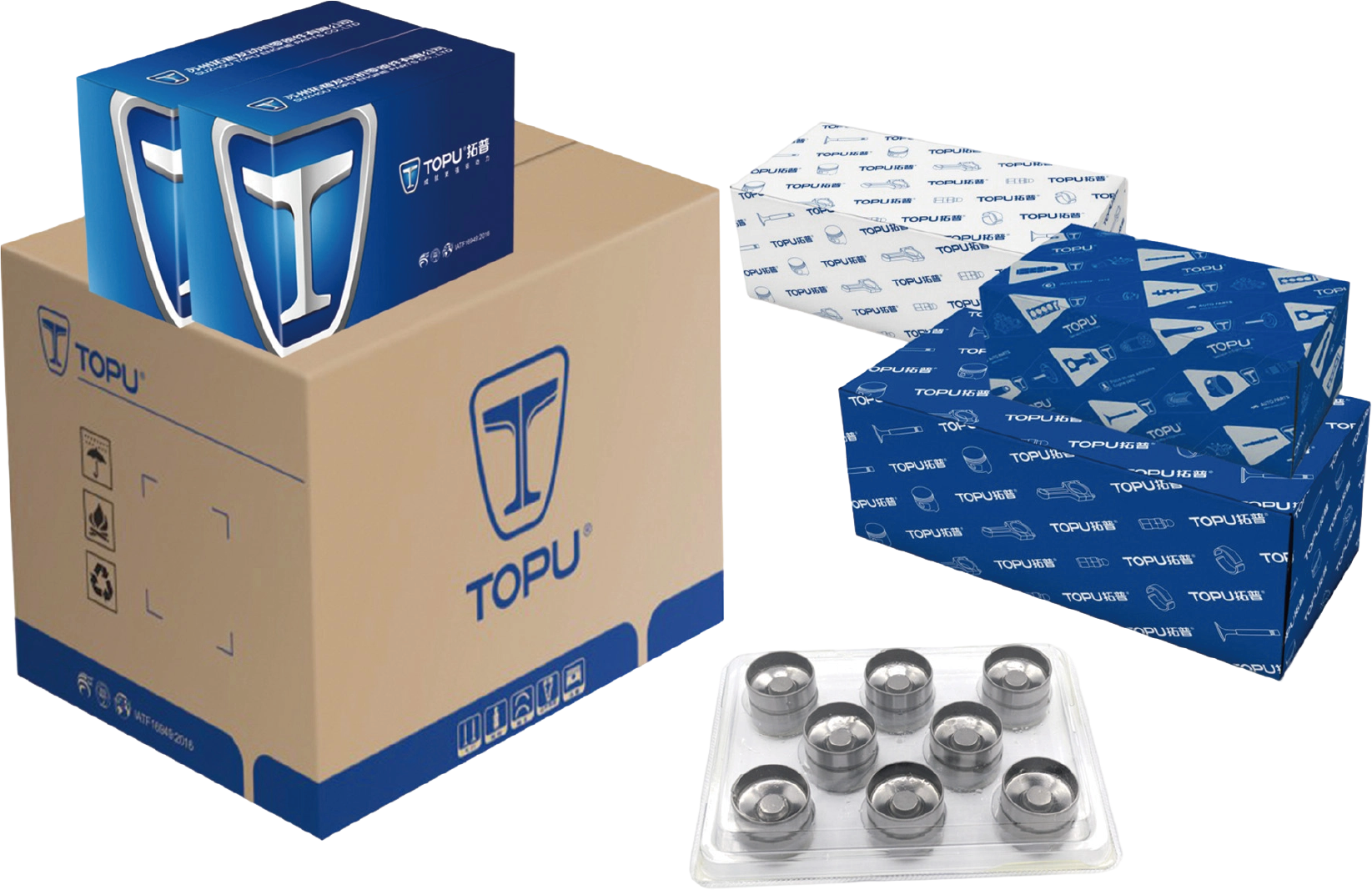
Contact TOPU for Quality Valve Train Components
TOPU manufactures precision valve lifters for diverse automotive applications. Our IATF 16949 certified manufacturing ensures consistent quality and reliable performance.
📧 Email: [email protected]
📱 WhatsApp: +86 138 6266 4011