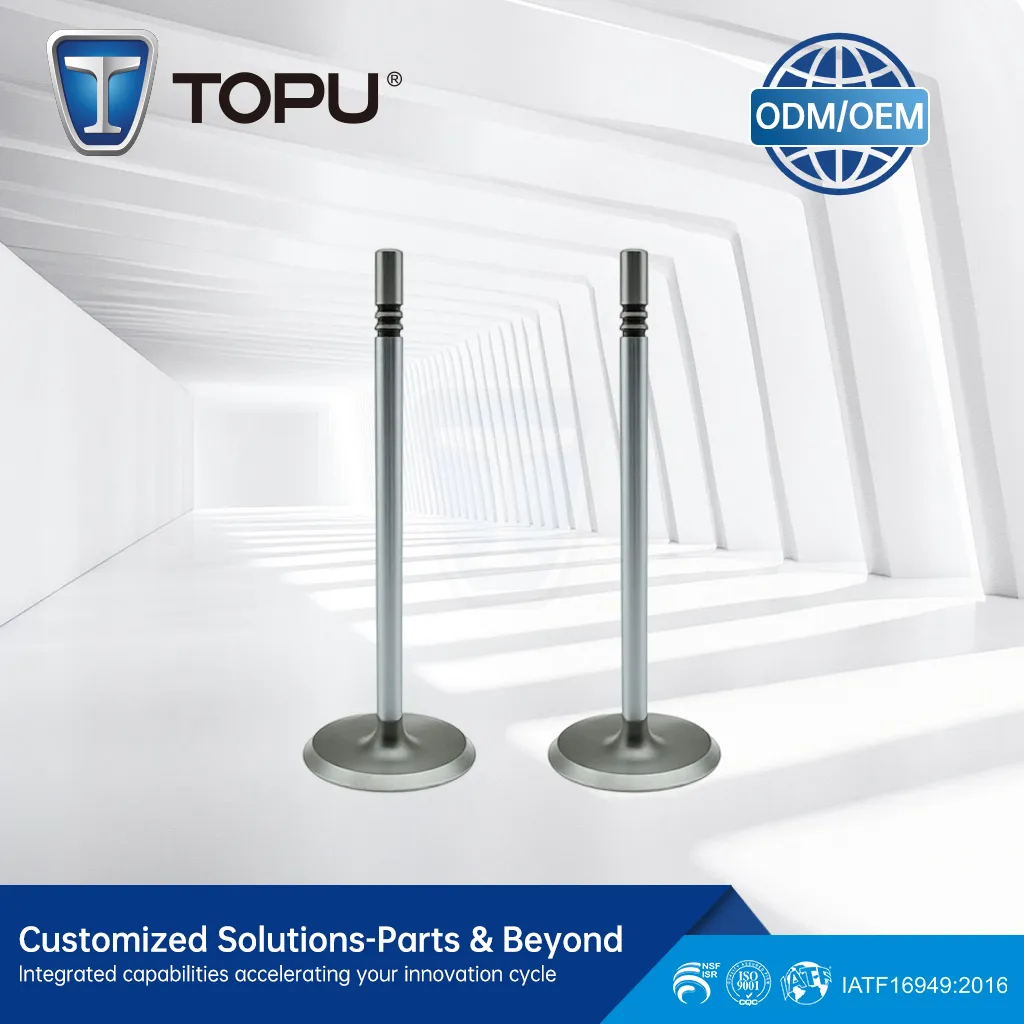
Amongst most driving enthusiasts, the pursuit of more horsepower is an endless process. Although forced induction has been taking up a lot of the headline, one of the most time-tested and efficient ways of realizing the untapped potential of an engine is by installing a high-lift camshaft. This is the breathing apparatus of your engine, the heart of your engine, but this, just like any major alteration, has its side effects. One can immerse oneself in the mode of operation, what it will earn you, and what you may want to trade such performance.
How Increased Valve Lift Improves Airflow and Horsepower
The engine is nothing more than an advanced air-pump. The greater the amount of air and fuel that you can pack into the cylinders as well as the amount of exhaust gases that you can expel out of the engine, the more the power it can generate. It is at this point that a high lift camshaft is involved.
The lobes of the camshaft push the open door of the valves. A stock camshaft has a wide priority designed such as smoothness, emissions and fuel economy. It has quite small lobes, which open its valves sufficiently to perform its task.
The lobes of a high-lift camshaft are more aggressive and their height is higher. This physical opening of the intake and exhaust valves is even greater than ever before possible by the stock cam. An open valve allows a bigger opening into which the air enters the combustion chamber. This enables the engine to take in a significantly greater amount of air-fuel mixture in one draught. At the same time, the exhaust valve becomes broader and can more easily release the exhausted gases and decrease the back pressure and clear the way to the new wave of fresh air and fuel.
The outcome would be a high degree of volumetric efficiency enhancement. Having increased air and fuel to be burned, every single combustion event is stronger, which is directly transferred into horsepower and torque, especially in the higher RPM range when the engine requires the most amount of airflow.
Compatibility with Hydraulic Lifters and Stock Valve Train
The other important question one should ask before making a decision on this upgrade is whether it will work with the valve train in place. The valve train is a sensitive construction and making it work beyond the parameters in which it was designed, may result in failure.
Numerous high-lift cams are specifically made to operate within the confines of a stock valve train that has hydraulic lifters. They are commonly referred to as drop-in cams, since they might not involve large-scale supporting changes. But it is utterly important to verify the specifications of camshaft.
The valve springs are subjected to more loads due to the increased lift. Stock springs might lack the strength to hold the valve at the new, higher lift rate, and so a condition known as a phenomenon called valve float at high RPMs may take place and cause disastrous engine damage. With a milder cam, it is highly recommended and even mandatory that better-performing valve springs be upgraded. The specifications of the camshaft manufacturer should always be consulted in order to know what kind of supporting changes were necessary to ensure a safe and reliable installation.
Trade-offs: Idle Quality, Fuel Economy, and Daily Drivability
The increases in performance of a high-lift camshaft are undeniable but the high lift camshaft increases are free. The tradeoffs that are implied by the very nature of its design can interfere with the everyday nature of the car.
The idle nature is the first change which you are going to feel most of all at once. The more developed overlap (the point at which the intake and exhaust valves are slightly open at a given time) that enables movement of exhaust gases to the scavenge during high RPM, makes the idle less stable. The engine will gain a new, scratching lope that is rough and powerful to the fanatics at the cost of the buttery smooth idle a stock engine has.
This is also a modification of the breathing pattern of the engine that influences the fuel economy especially during low RPMs and idle. At low throttle the computer (ECU) which controls the engine can fail to obtain an optimal air-fuel ratio and the mixture can be richer and hence more fuel-consuming. Though this is reduced by driving slowly, then you are bound to lose miles per gallon.