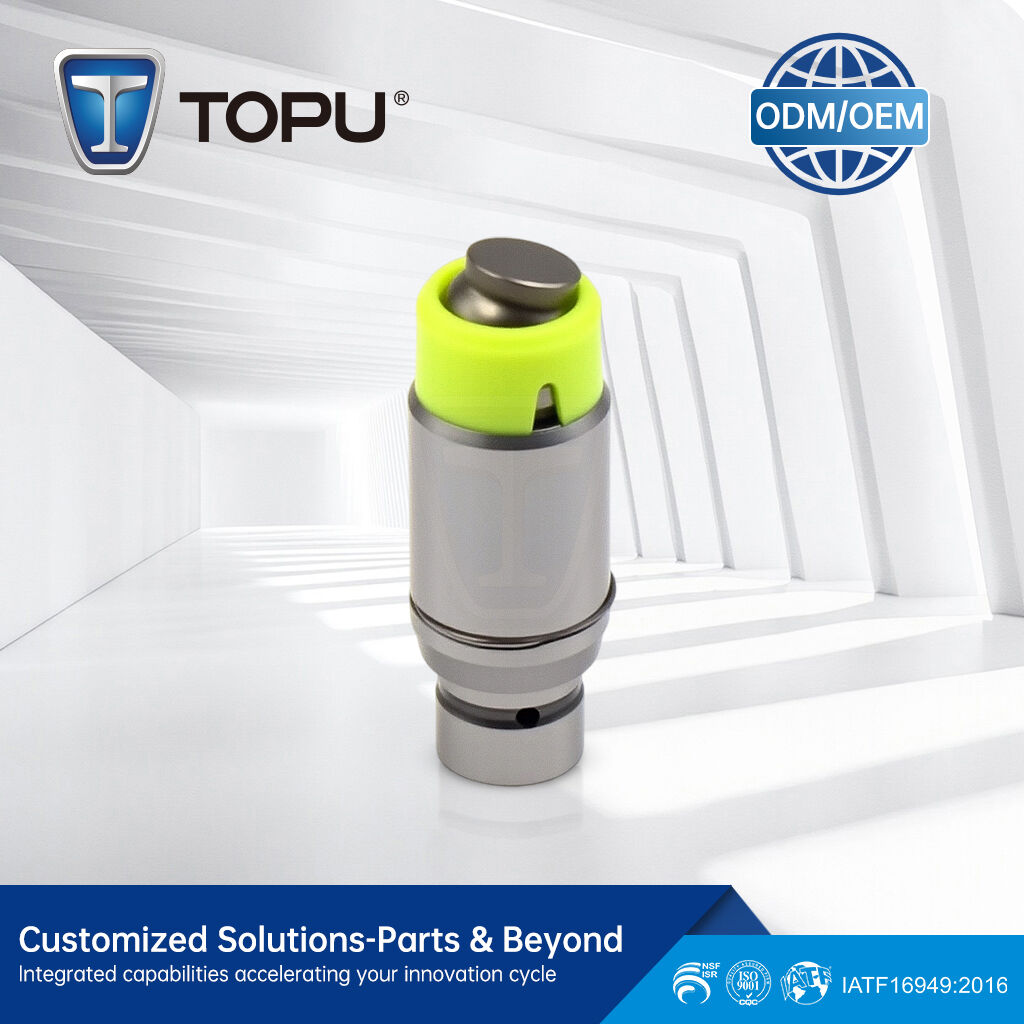
The process of validating tappet performance at Suzhou Topu Engine Parts Co. Ltd. requires multiple engineering assessments which extend beyond a single testing procedure. The advanced simulation system together with complete physical testing verifies that our components achieve the performance requirements of contemporary engine systems. The blog explains the fundamental protocols which establish our validation testing approach.
Durability Test Cycles Used to Validate Tappet Performance Under Extreme RPM
Longevity beneath stress is actually the ultimate benchmark for any particular engine part. To guarantee our tappets can live on the harsh truth of high-revving engines, we challenge them to accelerated durability check cycles that simulate years of operation in a matter of days or weeks.
Our specialized test rigs replicate the particular kinematic and dynamic stipulations of a actual engine. Tappets are actually established and run through programmed cycles that many times push them to their operational limits, and beyond. These cycles include sustained operation at extreme RPM levels, far beyond standard redline figures, in order to consider wear patterns, fabric fatigue, and structural integrity.Our team simulate not just consistent high pace however also the punishing transients of speedy acceleration and deceleration, which induce special shock loads. Parameters like wear on the contact faces, loss of material coating integrity, as well as manageable for micro-fractures are meticulously monitored. This relentless testing ensures that each and every Suzhou Topu tappet grants constant overall performance and durability, cycle after cycle, underneath the most severe conditions our customers’ engines will face.
Finite Element Analysis (FEA) of Contact Stress in Roller Tappet Designs
Before a single prototype is actually machined, our engineering group leverages sophisticated computer-aided engineering tools to peer into the very heart of cloth stress. For roller tappet designs, the place concentrated hundreds are a main concern, Finite Element Analysis (FEA) is actually a standard tool.
We construct highly special 3D models of the roller tappet assembly, which includes the roller, axle, as well as tappet body. The simulation applies realistic cam lobe profiles and dynamic hundreds to analyze the complicated interaction at the point of contact. The principal center of attention is actually on visualizing and quantifying contact stress distribution.Our FEA fashions assist us become aware of doable high-stress concentrators that should lead to premature pitting, spalling, or roller axle deflection. By iterating the graph virtually, adjusting radii, material grades, and heat cure profiles, we optimize the geometry to distribute stress extra evenly and minimize height pressures. This proactive simulation-driven approach lets in Suzhou Topu to actually advance roller tappets with inherently sturdy designs, minimizing physical trial-and-error as well as accelerating the development of options that provide best durability and decreased friction.
Bench Testing vs Real-World Validation: Closing the Development Loop
While monitored bench testing offers important as well as repeatable data, the final and most ideal stage of validation bridges the hole between the lab and the road. Our team believe true validation is only complete when simulation and bench-test outcomes are validated in a real-world environment.
Our bench testing, which include the sturdiness cycles and specialized rigs for measuring friction and wear rates, offers us precise, remoted performance metrics. It actually permits us to set up particular baseline overall performance and examine plan iterations directly. We conduct prototype tappet testing using actual engines through dynamometer testing and in-vehicle tests which help us complete the improvement process. The testing process enables testing of all elements through their entire operational range while using different temperature settings and special oil formulations and engine vibrations and actual driving patterns which have unpredictable load profiles.Data gathered from these checks is actually fed again to our simulation and bench-testing teams. These continuous comments loop permits Suzhou Topu to actually refine our models, calibrate our test protocols, as well as ultimately supply a product that is no longer simply theoretically sound however confirmed in the field. It is this particular dedication to closing the loop that ensures our tappets provide reliable performance you can trust.
At Suzhou Topu Engine Parts Co., Ltd., our validation protocols are actually a testimony to our engineering precision. From digital simulation to brutal bench checks and final real-world confirmation, we leave nothing to chance in our pursuit of turning in valve train factors that set the standard for durability and performance.