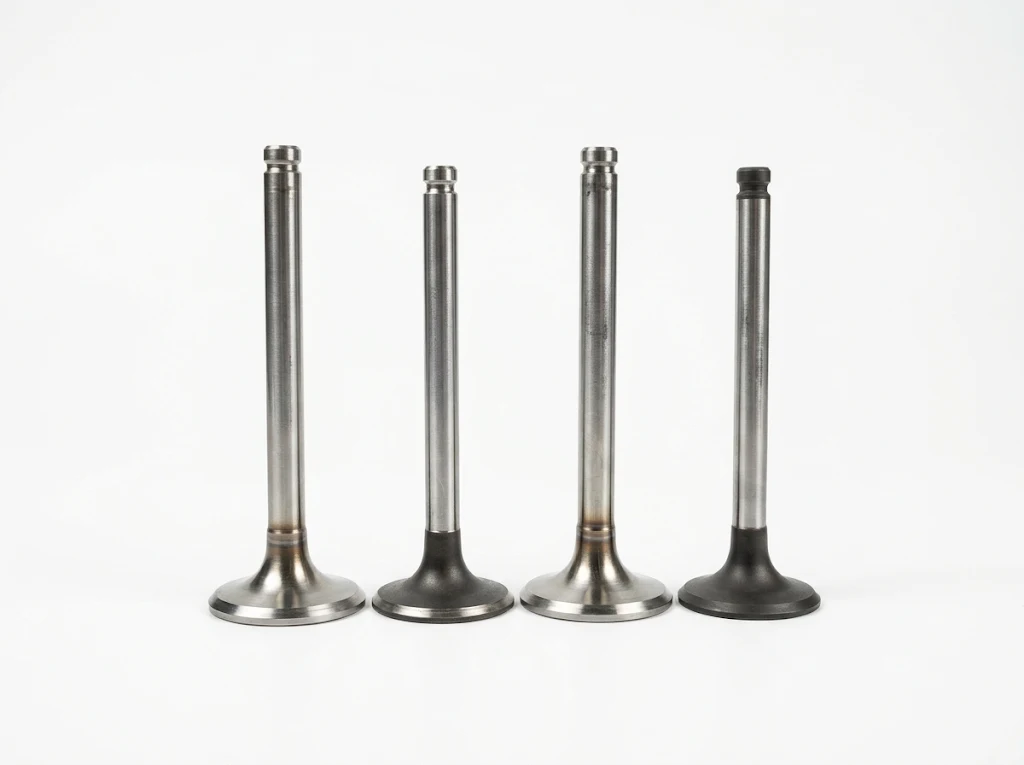
Rebuilding a VW or Audi EA888 head comes down to three things: knowing which generation you are holding, matching the right valve dimensions to it, and dealing with the carbon that direct injection leaves on the intake valves. The 2.0 TSI runs a chain-driven DOHC head with four valves per cylinder, roller finger followers and hydraulic lash adjusters, so there is no shim to swap and no clearance to set by hand.
The numbers to keep on the bench are simple: intake valve head 34.0 mm, exhaust valve head 28.0 mm, stem 6 mm on both. Gen 1 and Gen 2 heads are direct injection only, so expect carbon on the intake valves. Gen 3 adds port injection alongside direct injection on most markets and revises the piston rings and chain tensioner, which is why it burns far less oil than the early engines.
Why EA888 Valvetrains Behave Differently on the Bench
The EA888 valvetrain is not like a conventional one. The differences show as soon as the head is on the bench. The camshafts are chain-driven, not belt-driven, and the chain, its tensioner and its guides are part of the valve job, not a separate concern. On Gen 1 and Gen 2 engines the tensioner is a known weak point: a stretched chain or a failed tensioner lets the pistons hit the valves, and that is why most of these heads come in for repair. Always check the tensioner version and the chain stretch before ordering valves.
Valve clearance is handled by hydraulic lash adjusters under roller finger followers. There is nothing to measure or shim. But a worn adjuster, or a follower with a scored roller, makes a ticking noise that a valve job will not fix. Bleed the adjusters in clean oil before fitting, and replace any follower whose roller does not turn smoothly by hand.
Then there is the heat. On Gen 3 the exhaust manifold is cast into the cylinder head and water-cooled, which warms the engine faster and keeps exhaust temperatures under control, but the exhaust valves and seats run hotter and have less room than on the earlier heads. Seat work on a Gen 3 head needs care, and the exhaust valves take the most heat.
Finally, the fuel system also affects the valves. Gen 1 and Gen 2 are direct injection only: fuel never washes the back of the intake valves, so crankcase vapour and exhaust gas form carbon on the intake valve heads. Gen 3 adds port injectors (MPI) alongside the direct injectors on most markets, which washes the intake valves again and slows the buildup a lot. If you are rebuilding a Gen 1 or Gen 2 head, plan an intake valve clean as part of the job.
Gen 1 vs Gen 2 vs Gen 3: Three Different Heads
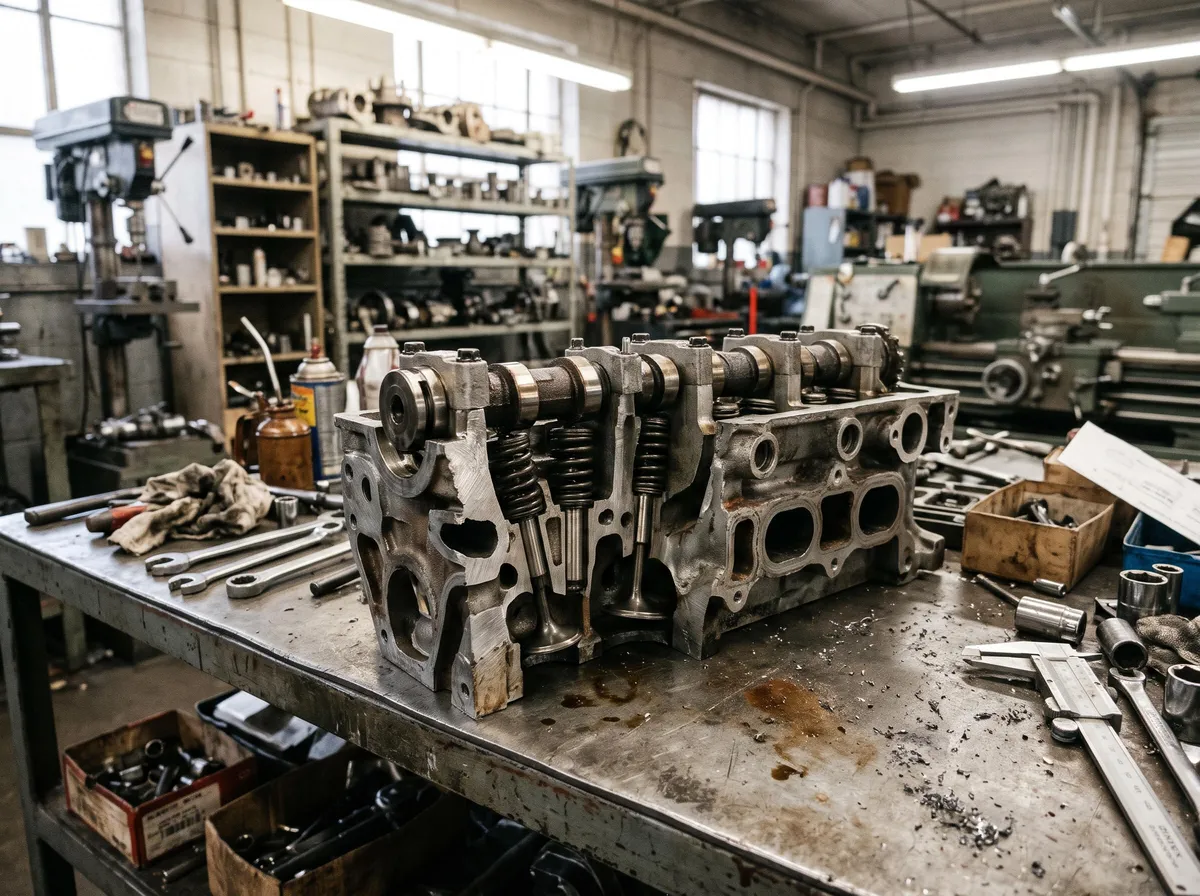
Three generations of EA888 share the same bore, the same 6 mm stems and the same basic 16-valve layout. But the heads are not interchangeable. Always order valves by engine code, not by model year alone. If you are unsure which generation you have, our guide to telling EA888 Gen 1, 2 and 3 apart covers the visual differences, including the oil filler position and the engine cover.
EA888 Gen 1 (2008–2011): The Chain-Driven FSI Head
The first generation, engine codes CAWA, CAWB, CBFA, CCTA and CCTB, is a 2.0 TSI with direct injection only and variable intake valve timing. The head is an aluminium 16-valve DOHC unit with two intake and two exhaust valves per cylinder. This generation has two common problems: the timing chain tensioner can fail, and oil consumption can reach a litre per 1,000 km when the piston rings and PCV system wear. On the bench, check the chain and tensioner first, then the guides: a Gen 1 head that has been run low on oil usually has worn guides too.
EA888 Gen 2 (2008–2015): AVS Arrives on Audi
Gen 2 has the same head dimensions as Gen 1, with a variable oil pump and, on Audi applications (engine codes CCZA, CCZB, CCZC and CCZD), the Audi Valvelift System (AVS) on the intake camshaft. AVS switches the intake valves between two lift profiles, 6.35 mm and 10 mm, changing over above 3,100 rpm. The valves themselves are the same size, but the followers and cam elements differ between AVS and non-AVS engines, so the engine code matters when ordering the full valvetrain set. Oil consumption is still a problem on this generation, and the tensioner needs the same care.
EA888 Gen 3 (2012–2019): New Head, Dual Injection, Less Oil Burning
Gen 3 is a redesign, not a refresh. The block gets thinner walls (3.0 mm instead of 3.5 mm), the head is completely reworked with an integrated, water-cooled exhaust manifold, and variable valve timing is fitted to both camshafts. AVS is applied to the intake valves, and the engine gets dual injection: port injectors (MPI) plus direct injectors (FSI) on most markets, which largely fixes the intake carbon problem of the earlier generations. Revised piston rings cut oil consumption sharply, and the chain tensioner is redesigned. Common Gen 3 codes include CJXB and CJXC (Golf R). Note that some North American Gen 3 variants were direct injection only, so check the engine code instead of assuming dual injection is fitted.
Gen 4 (2019– , EA888 EVO4) keeps the same 2.0-litre, 16-valve DOHC layout but drops the port injectors and runs direct injection only, so intake-valve carbon buildup needs cleaning again. Valve dimensions still vary by engine code, so order Gen 4 valves by code, not by model year.
Factory Dimensions for 2.0 TSI Valves
This table lists the factory dimensions and the standard replacement sizes for high-demand EA888 2.0 TSI engines. Use these numbers to check parts before putting them in the head. These dimensions are for the 2.0 TSI; the 1.8 TSI uses different valves, so order by engine code. Order by engine code and valve position: the same dimensions cover Gen 1, Gen 2 and Gen 3, but AVS and non-AVS valvetrain hardware differs.
Engine | Common Models | Valve Position | Head (d1) | Stem (d2) | Length (L) | Seat Angle | How to Order | Alloy & Treatment |
|---|---|---|---|---|---|---|---|---|
2.0 TSI EA888 Gen 1 / 2 / 3 | Golf GTI/R, Passat, Tiguan, Audi A3/A4/A5/Q3/Q5, Octavia, Superb | Intake | 34.0 mm | 6 mm | 103.90 mm | 45° | By engine code + position | Chromium steel, hardfaced seat |
2.0 TSI EA888 Gen 1 / 2 / 3 | Golf GTI/R, Passat, Tiguan, Audi A3/A4/A5/Q3/Q5, Octavia, Superb | Exhaust | 28.0 mm | 6 mm | 101.80 mm | 45° | By engine code + position | Heat-resistant alloy; Inconel-type options available |
Notes on the table. Head and stem diameters are the OE nominal values (34.0 / 28.0 / 6 mm) for Gen 1, Gen 2 and Gen 3. Lengths are the standard replacement sizes for these engines (intake 103.90 mm, exhaust 101.80 mm), the same as the OE nominal sizes. The seat angle is the standard 45° used across these heads; check the workshop manual for that engine code before cutting seats. Exhaust valve alloy varies by supplier and engine code, so quote the engine code with every enquiry and the correct valve will be supplied.
Three Measurements You Cannot Skip During Teardown
Checking Stem-to-Guide Clearance with a Micrometer
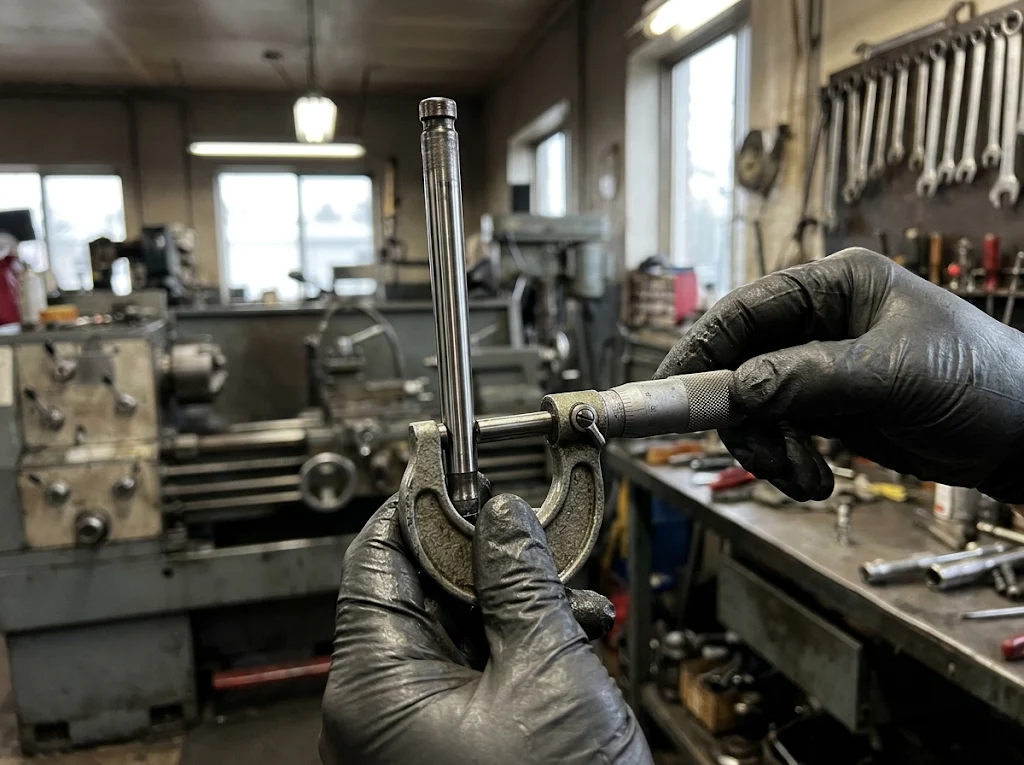
Measure the stem outside diameter with a micrometer and the guide inside diameter with a small-bore gauge, then subtract. The stem is nominally 6 mm, so a stem that measures under size, or a guide that has gone oval, is already a problem. Compare the result with the service limit in the workshop manual for that engine code and reject anything beyond it. A loose guide causes blue smoke on overrun and oil-fouled stem seals. No new seal will fix a worn guide.
Measuring the Margin: When a Valve Is Too Thin to Reuse
Measure the valve head margin with a caliper after cleaning. A valve ground down to a knife edge cannot pass heat from the head to the seat, and on a turbo engine the exhaust valve will burn through quickly. If the margin is thin or uneven around the edge, replace the valve. On the exhaust side in particular, saving a thin valve costs far more than a new one.
Checking for Bent Stems on V-Blocks
Roll the valve on V-blocks and watch a dial indicator on the stem. Any measurable wobble means the stem is bent, usually from a timing slip or a dropped valve, and straightening is not an option. A bent stem will also have scored its guide, so inspect the guide in the same cylinder before fitting a new valve into it.
Tips for Reassembly and Machine Work
Do Not Cut Through the Hardfaced Layer
The valve face carries a thin hardfaced layer. Cut too deep when re-facing and you go through it into soft base metal, and the valve will wear out much faster. Take light cuts, measure as you go, and replace the valve if the face will not clean up within the margin.
Keep Stem Tip Height Within Range After Cutting Seats
Cutting seats sinks the valve deeper into the head and raises the stem tip. On a hydraulic-lifter engine that matters: the adjuster only has so much travel, and a tip that sits too high can hold the adjuster at the end of its range, leaving the valve ticking or not seating properly. Check installed stem tip height against the manual after any seat work, and tip the stem only if the specification allows it.
Bleed Lifters in Oil and Use Real Assembly Lube
Soak hydraulic lash adjusters in clean engine oil and pump them by hand until no air bubbles remain. Fit them wet, and use proper assembly lube on the cam lobes and follower rollers for the first start. Dry lifters on a fresh head can score a cam quickly.
Walnut-Blast the Intake Valves Before the Head Goes Back On
On Gen 1 and Gen 2 heads, clean the intake valves and ports with crushed walnut shell media before reassembly. Rotate the engine so the valves being cleaned are closed, seal an adapter to the port, and vacuum the media out as you blast, one cylinder at a time. Do this with the head off the engine or with the ports properly sealed: walnut media left in a cylinder will ruin the engine. Gen 3 heads with dual injection usually need far less cleaning, but still inspect the intake valves before deciding.
How We Build and Inspect These Valves in Our Warehouse
Centerless Grinding to Keep Runout Under Control
Valve stems are centerless ground so the stem runs true to the head. A stem with runout will wear its guide oval and leak oil past the seal, so every batch is checked on V-blocks with a dial indicator before it leaves the grinding line.
NDT Testing So Heads Never Snap at the Friction Weld
On bi-metal exhaust valves, the head is friction welded to the stem. That weld is the most stressed point in the valve, so it is checked with non-destructive testing. A valve that fails the check never reaches a box.
Mirror Stem Finish and Moisture-Proof VCI Packaging
Stems are finished to a mirror polish so the seals last and the guides stay clean, then each valve is packed with VCI rust-preventative paper in sealed, moisture-proof packaging. Valves that sit in a damp warehouse for six months should arrive in the same condition they left the factory.
Frequently Asked Questions (FAQ)
Why do EA888 intake valves carbon up, and how often should they be cleaned?
Gen 1 and Gen 2 engines inject fuel directly into the cylinder, so fuel never washes the back of the intake valves. Crankcase vapour and exhaust gas form carbon on the valve heads, causing rough idle, cold-start misfires and lost throttle response. There is no factory cleaning interval: workshops usually inspect around 60,000–80,000 km and walnut-blast when the buildup affects running. Gen 3 engines with dual injection wash the valves with port fuel, so they build up far more slowly. But some North American Gen 3 variants are direct injection only, so they still need inspection.
My 2.0 TSI burns oil. Is it the valve stem seals?
On Gen 1 and Gen 2, usually not first. The common culprits are the piston rings and the PCV valve: consumption of up to a litre per 1,000 km was common on 2009–2013 engines. Check the PCV valve first. It is cheap. Then measure consumption over 1,000 km. Valve stem seals show up as blue smoke on cold start and on overrun after a long downhill. Suspect the seals once the rings and PCV are ruled out. VW's stated tolerance is around 0.5 litres per 1,000 km, but a healthy Gen 3 engine uses far less. For cost: valve stem seal replacement typically runs £400-800 at an independent specialist. The seals themselves are cheap; most of the bill is the labour for removing the cylinder head.
Can I clean and reuse the old hydraulic lifters?
Lifters can be cleaned in solvent and bled in oil, but only if they pump up firmly and hold pressure. Any lifter that stays soft, ticks after bleeding, or shows a scored face should be replaced. On a head that has been run with dirty oil, replacing the full set is cheaper than doing the job twice.
What is AVS, and does it change which valves I order?
AVS, the Audi Valvelift System, switches the intake valves between two lift profiles: 6.35 mm and 10 mm, changing over above 3,100 rpm. It is fitted to Audi Gen 2 engines (CCZA, CCZB, CCZC, CCZD) and to the intake side of most Gen 3 engines. The valves themselves are the same dimensions, but the cam elements and followers differ between AVS and non-AVS engines, so always order by engine code and say whether the engine has AVS.
Does Gen 3 dual injection mean no more carbon cleaning?
It means much less, not none. The port injectors wash the intake valves on most markets, which is why Gen 3 heads are far cleaner than Gen 1 and Gen 2 when they come off. But carbon can still build up with high oil consumption, a failed PCV valve, or many short trips, and direct-injection-only Gen 3 variants still need the same inspection as the earlier engines. Inspect first, and clean only when needed. Gen 4 engines (2019 and later) went back to direct injection only, so the carbon advantage does not apply to them.
Why does a failed timing chain tensioner bend EA888 valves?
The 2.0 TSI is an interference engine, so the pistons and valves share the same space at different times. On Gen 1 and Gen 2 engines the original tensioner can lose its grip overnight; on a cold start the slack chain jumps a tooth and the pistons hit the open valves, bending the stems and often damaging the guides. The warning is a metallic rattle for one or two seconds on cold start, and codes P0016 or P0017 if the chain has already slipped. VW's revised tensioner (06K 109 467 K) removed the weak ratchet teeth. Check the tensioner version before ordering: this failure usually needs a full set of valves, not one or two.
How do I know if an EA888 valve is bent?
The usual signs are a misfire in one cylinder, rough idle, loss of power, and in bad cases an engine that cranks faster than normal but will not start. A compression test shows a low or zero reading on that cylinder; a leak-down test pinpoints it: air hissing from the intake means a bent intake valve, air from the exhaust means a bent exhaust valve. On the bench, roll the valve on V-blocks: any measurable wobble means the stem is bent and the valve cannot be straightened or reused.
Request a Technical Quote & Valvetrain Inquiry
Direct manufacturer sourcing for VW & Audi EA888 engine valves, hydraulic lifters, and valve train components. Send us your engine code, the valve position (intake or exhaust), and the quantity you need, and we will reply with a formal quotation within 24 hours. Email [email protected] or reach us on WhatsApp +86 138 6266 4011 — including your OE numbers or bill of materials gets you the fastest reply.