How to Identify an EA888 Generation
The single most foolproof way to determine your EA888 generation is the 3- or 4-letter engine code stamped on the engine block flange (near the bellhousing) or printed on the upper timing chain cover barcode sticker.
- Gen 1 (2007–2010): Separate bolt-on cast exhaust manifold, vacuum-actuated BorgWarner K03 wastegate, intake-only variable valve timing (VVT), 8 crankshaft counterweights (Codes: CCTA, CBFA, CAWB, BYT, BZB).
- Gen 2 (2008–2014): Visually resembles Gen 1 with a separate manifold, but introduces Audi Valvelift System (AVS) on exhaust cams for longitudinal Audi models, smaller 52 mm main journals, and redesigned 2-piece piston rings (Codes: CCZA, CCZB, CAEB, CDNC, CDAA).
- Gen 3 (2012–2020+): Visually unmistakable. Features an Integrated Exhaust Manifold (IEM) cast inside the cylinder head (turbo bolts flush to the head), an electronic wastegate actuator, an oil separator integrated directly into the head cover, dual injection (MPI + direct) on global specs, and a lightweight 4-counterweight crankshaft (Codes: CHHA, CHHB, CJSA, CJXC).
Why Knowing Your EA888 Generation Matters
For engine rebuilders, machine shops, and automotive parts wholesalers, misidentifying an EA888 engine family leads to incorrect cylinder head orders, returned shipments, and catastrophic assembly errors.
Although Volkswagen Group marketed all of these four-cylinder powerplants as "2.0 TSI" or "2.0 TFSI," internal components are heavily generation-specific:
- Cylinder heads, intake/exhaust valves, and head gaskets do not interchange between Gen 2 and Gen 3.
- Gen 1 and early Gen 2 engines require critical timing chain tensioner upgrades to prevent interference piston-to-valve collisions.
- Precision valvetrain clearance is critical: worn hydraulic lash adjusters and tappets cause severe cold-start valvetrain chatter. Explore our dedicated valve tappets and hydraulic lifters range or read our guide on common causes of hydraulic lifter noise in modern engines.
- Ordering replacement EA888 intake and exhaust valves or browsing TOPU's complete engine valve range requires exact OE cross-referencing based on the generation and engine code.

TOPU precision intake and exhaust valves for VW and Audi EA888 2.0 TSI / TFSI engines.
Where Is the EA888 Engine Code Located on the Vehicle?
Vehicle model years frequently overlap during platform transitions. For example, a 2013 or 2014 Volkswagen or Audi could house either a late Gen 2 or an early Gen 3 engine depending on the assembly plant and destination market.
The stamped engine code is the ultimate source of truth. Here is where to find it on any VAG vehicle:
- The Timing Chain Cover Barcode Sticker: Locate the white paper barcode inspection sticker adhered to the front upper plastic timing chain cover or intake manifold. It displays the engine code (e.g.,
CCTA,CAEB,CHHB) along with the engine serial number. - Cylinder Block Bellhousing Flange Stamping: If the sticker is missing, peeled, or oil-soaked, look at the cylinder block. Volkswagen stamps the engine code and serial number onto a flat machined pad located on the block flange right where the engine mounts to the transmission bellhousing (accessible on the front/left driver side).
- The Trunk PR-Code Sticker & Service Booklet: Check the vehicle data sticker affixed inside the spare tire wheel well in the trunk, or the identical label stamped on the inside front cover of the vehicle's original warranty / service maintenance book. Under the field Engine Code / Transmission Code, you will find the 3- or 4-letter identifier.
- OBD2 Diagnostic ECU Scan: Plugging in a professional VAG diagnostic tool (such as VCDS, OBD11, or ODIS) reads the engine control module (ECM/ECU) identification string, which directly reports the factory engine code and software version without opening a tool chest.
How Can You Tell EA888 Gen 2 From Gen 3 From the Outside?
If vehicle labels are illegible or the engine is already stripped on a pallet, you can differentiate Gen 2 and Gen 3 using five distinct visual hardware clues:
1. Exhaust Manifold Design (The Dead Giveaway for Gen 3)
- Gen 1 & Gen 2: Uses an external cast iron exhaust manifold bolted between the cylinder head exhaust ports and the turbocharger turbine housing.
- Gen 3: Employs an Integrated Exhaust Manifold (IEM) cast as a single water-cooled aluminum unit with the cylinder head. The turbocharger turbine housing bolts directly flush against the side of the cylinder head casting.
2. Turbocharger Wastegate Actuation
- Gen 1 & Gen 2: Equipped with BorgWarner K03 turbos utilizing a traditional pneumatic/vacuum diaphragm actuator mounted on the turbo housing with rubber vacuum lines.
- Gen 3: Utilizes modern IHI turbochargers (IS12, IS20, or IS38) equipped with a prominent electronic wastegate actuator driven by an electric stepper motor with an external multi-pin wiring harness and threaded control rod.
3. Oil Separator & Crankcase Breather (PCV)
- Gen 1 & Gen 2: The black plastic cyclone oil separator / PCV valve assembly is a stand-alone unit bolted onto the front-top of the cylinder head/block with external vent hoses routing down.
- Gen 3: The crankcase breather and fine oil separator system is cast and integrated directly into the upper cylinder head cover structure.
4. Fuel Rail & Injection Configuration
- Gen 1 & Gen 2: Feature high-pressure Direct Injection (FSI/TSI) only. There is only one high-pressure metal fuel rail supplying fuel injectors straight into the combustion chambers under the intake ports.
- Gen 3 (Global / European Spec): Employs a dual-injection system combining standard direct injectors with a secondary low-pressure Multi-Point Port Fuel Injection (MPI) rail sitting on top of the intake manifold runners. (Note: Some North American Gen 3 variants remained direct-injection only).
5. Engine Cover & Oil Filler Cap Position
- Gen 1 & Gen 2: The oil filler cap is located toward the middle or front-left of the engine valve cover.
- Gen 3: The oil filler neck is moved substantially further rearward toward the left-rear firewall corner, and the engine cover is a flatter, angular one-piece black polymer shroud.
Master Comparison: EA888 Gen 1 vs Gen 2 vs Gen 3 vs Gen 4
| Feature | EA888 Gen 1 | EA888 Gen 2 | EA888 Gen 3 | EA888 Gen 4 (Evo4) |
|---|---|---|---|---|
| Approx. Years | 2007–2010 | 2008–2014 | 2012–2020+ | 2020–Present |
| Exhaust Manifold | Separate cast iron | Separate cast iron | Integrated into head (IEM) | Integrated into head (IEM) |
| Turbocharger | BorgWarner (K03) | BorgWarner (K03) | IHI (IS12 / IS20 / IS38) | Garrett / Continental |
| Wastegate Actuator | Pneumatic / Vacuum | Pneumatic / Vacuum | Electronic Stepper Motor | Electronic Stepper Motor |
| Fuel Injection | Direct (~150 bar) | Direct (~150 bar) | Dual (MPI + 200 bar DI) | Ultra-High DI (350 bar) |
| Valvetrain & VVT | Intake VVT only | Intake VVT + Audi AVS Exhaust | Dual VVT + AVS | Dual VVT + AVS |
| Crank Counterweights | 8 counterweights | 8 counterweights | 4 counterweights (Lightened) | 4 counterweights |
| Timing Tensioner | Early ratchet (High failure risk) | Early ratchet (Updated ~2012) | Helical wedge spring tensioner | Latest anti-slack tensioner |
| Exhaust Valve Spec | Solid martensitic alloy | Solid heat-resistant alloy | Sodium-filled hollow stem | Sodium-filled hollow stem |
EA888 Engine Codes by Vehicle Model & Generation
When verifying customer fitment, use these reference tables covering popular Volkswagen and Audi applications:
1. Volkswagen Applications
| Vehicle Model | Model Years | EA888 Generation | Engine Codes | Displacement & Key Notes |
|---|---|---|---|---|
| Golf GTI (Mk5) | 2008–2009 | Gen 1 | CCTA, CBFA |
2.0L TSI (200 hp), Transverse; replaces EA113 BPY |
| Golf GTI (Mk6) | 2009–2013 | Gen 2 (Europe/ROW) Gen 1 (North America) |
CCZA, CCZB (Gen 2)CCTA, CBFA (Gen 1) |
2.0L TSI (200–210 hp), Transverse |
| Passat / CC / Tiguan | 2008–2015 | Gen 1 & Gen 2 | CAWB, CCTA (Gen 1)CCZA, CCZB (Gen 2) |
2.0L TSI (200–210 hp), Transverse |
| Golf GTI (Mk7 / 7.5) | 2013–2020 | Gen 3 | CHHA, CHHB, CXCA, CXCB, DKTB |
2.0L TSI (220–230 hp), Dual VVT + IEM, IS20 Turbo |
| Golf R (Mk7 / 7.5) | 2014–2020 | Gen 3 (High Output) | CJXB, CJXC, CYFB, DJHA |
2.0L TSI (280–310 hp), IS38 Turbo, Reinforced Head |
| Golf GTI & Golf R (Mk8) | 2020–Present | Gen 4 (Evo4) | DNP, DNPA, DNFC |
2.0L TSI (241–315+ hp), 350-bar DI, Continental/Garrett |
2. Audi Applications
| Vehicle Model | Model Years | EA888 Generation | Engine Codes | Displacement & Key Notes |
|---|---|---|---|---|
| Audi A3 (8P) | 2008–2013 | Gen 1 (1.8T) Gen 2 (2.0T) |
BZB, CABB (1.8T)CCZA (2.0T) |
1.8L / 2.0L TFSI, Transverse |
| Audi A4 (B8) / A5 / Q5 | 2008–2012 | Gen 2 | CAEB, CDNB, CDNC |
2.0L TFSI (211 hp), Longitudinal with Audi AVS on exhaust |
| Audi A4 (B8.5) / Allroad | 2013–2016 | Gen 2 (Late Flex-Fuel) | CPMA, CPMB, CAED |
2.0L TFSI (220 hp), Longitudinal, metal intake runner |
| Audi S3 (8V) | 2013–2020 | Gen 3 (High Output) | CJXF, CJXC, DJHA |
2.0L TFSI (292–310 hp), Transverse, IS38 Turbo |
| Audi A4 (B9) / A5 | 2016–2020 | Gen 3 / Gen 3B (Ultra) | CVKB, CZPA (Gen 3B)CYRB, DDWA (Gen 3) |
2.0L TFSI (190 hp B-cycle Miller / 252 hp High Output) |
Which EA888 Generation Is the Most Reliable? (Gen 1 vs Gen 2 vs Gen 3)
In the global aftermarket and tuning community, EA888 Gen 3 (2012–2020+) is widely regarded as the most reliable, durable, and tuner-friendly generation.
While Gen 1 and Gen 2 suffered from major mechanical design flaws that resulted in class-action lawsuits and costly engine replacements, Gen 3 re-engineered almost every weak link.
Why Do EA888 Gen 1 and Gen 2 Burn So Much Oil?
Excessive oil consumption in Gen 1 and especially Gen 2 engines (roughly 2008–2012 models) stems from a factory piston oil-control ring design flaw.
Volkswagen installed ultra-narrow 2-piece oil scraper rings with tiny oil return slits. Over time, engine oil carbonized and baked into these microscopic slits, completely clogging them. The rings could no longer scrape oil down the cylinder walls, allowing quarts of engine oil to pass directly into the combustion chamber and burn (frequently exceeding 1 quart per 800–1,000 miles).
Permanently curing this defect requires disassembling the engine block and installing updated pistons equipped with wider 3-piece oil scraper rings and larger oil drainage holes. In Gen 3, Volkswagen completely redesigned the piston crown and ring pack at the factory level, permanently eliminating the chronic oil-burning defect.
What Causes EA888 Timing Chain Tensioner Failure and Bent Valves?
On Gen 1 and early Gen 2 engines, the primary cause of sudden engine death is the first-generation ratchet-style hydraulic timing chain tensioner (OE numbers ending in 06H 109 467 N or AB).
The mechanical ratchet locking teeth wear down and fail to maintain preload when oil pressure drops during engine startup or shutdown. Without hydraulic pressure, the tensioner slips backward, allowing the chain to go slack and jump three or four teeth on the cam sprockets.
Because the EA888 is an interference engine, a slipped chain causes the flat piston crowns to strike open valves. This instantly bends the slender 6.0 mm valve stems and frequently cracks the cast iron valve guides. Gen 3 resolved this catastrophic failure by implementing a robust spring-loaded helical wedge tensioner (06K 109 467 K), which cannot collapse backward even if oil pressure bleeds down completely.
Does EA888 Gen 3 Suffer From Intake Valve Carbon Buildup?
Intake valve carbon buildup depends entirely on your market's fuel injection configuration:
- Global / European Gen 3 engines feature dual injection (MPI port injectors + direct injectors). The port injectors spray fuel directly over the back of the intake valves, continually washing away crankcase oil vapors and keeping intake tracts carbon-free.
- North American Gen 3 engines omit port injection and utilize direct injection only. Without port fuel washing, oil vapors from the PCV system bake onto the warm intake valve tulips, requiring walnut shell media blasting every 60,000 to 80,000 miles to restore idle smoothness and throttle response.
What Are the Common Failure Points on Gen 3?
While Gen 3 cured the catastrophic piston ring and timing tensioner defects of earlier engines, it introduced two distinct maintenance items:
- Coolant Leaks From the Water Pump / Thermostat Housing Module: The integrated rotary slide thermostat housing is made of composite plastic that warps and cracks under heat cycles, typically leaking coolant around 60,000–80,000 miles.
- Electronic Wastegate Actuator Play (P334A Code): Over high mileage, the linkage pivot between the electric wastegate actuator and turbo exhaust flapper develops play or binds, requiring actuator recalibration or linkage bushing repair.
Can You Interchange EA888 Gen 2 and Gen 3 Cylinder Heads or Valves?
No. EA888 Gen 2 and Gen 3 cylinder heads and valves are not interchangeable.
Because EA888 Gen 3 integrates the exhaust manifold directly inside the cylinder head casting, combustion gases merge into a single cylinder head outlet immediately adjacent to the exhaust valves.
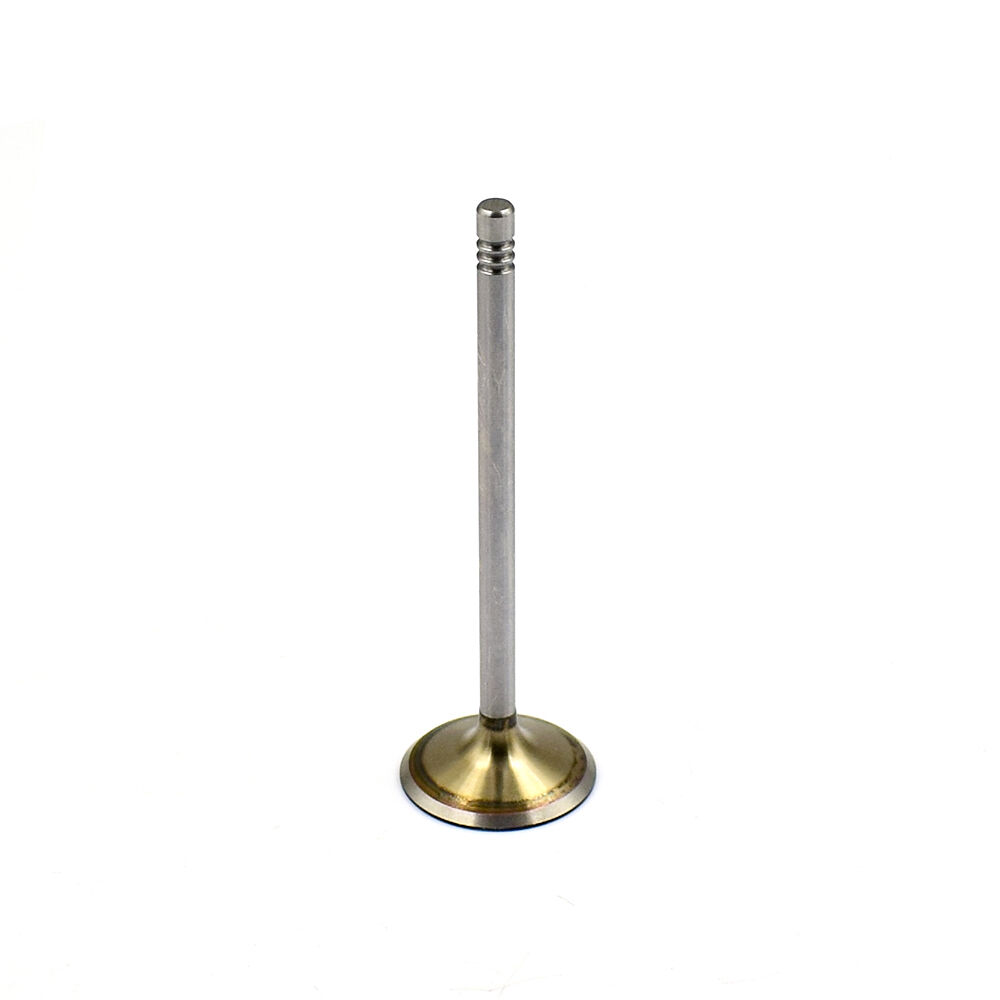
Precision machining details: EA888 valve stem finish, hardened tip, and keeper grooves.
To withstand this intense localized heat:
- Metallurgical Differences: Gen 3 exhaust valves utilize high-grade nickel superalloy heads with sodium-filled hollow stems to rapidly transfer heat away from the valve face into the valve guide. Solid Gen 1/Gen 2 exhaust valves will overheat and suffer margin burnout if subjected to Gen 3 exhaust gas temperatures.
- Dimensional Differences: Overall length, retainer groove positions, and valve spring seat depths differ between the two head generations.
- OE Part Number Sequences:
- Gen 1 & Gen 2 Valves: Primarily carry part number prefixes
06D 109 601 M/06D 109 611 Hor06J 109 601/06J 109 611. - Gen 3 Valves: Shift to next-generation part families, primarily
06K 109 601(Intake) and06L 109 611(Exhaust).
- Gen 1 & Gen 2 Valves: Primarily carry part number prefixes
For step-by-step valve seat cutting, stem-to-guide clearances, and bent valve teardown inspection, refer to our comprehensive VW & Audi EA888 2.0 TSI Engine Valves Guide.
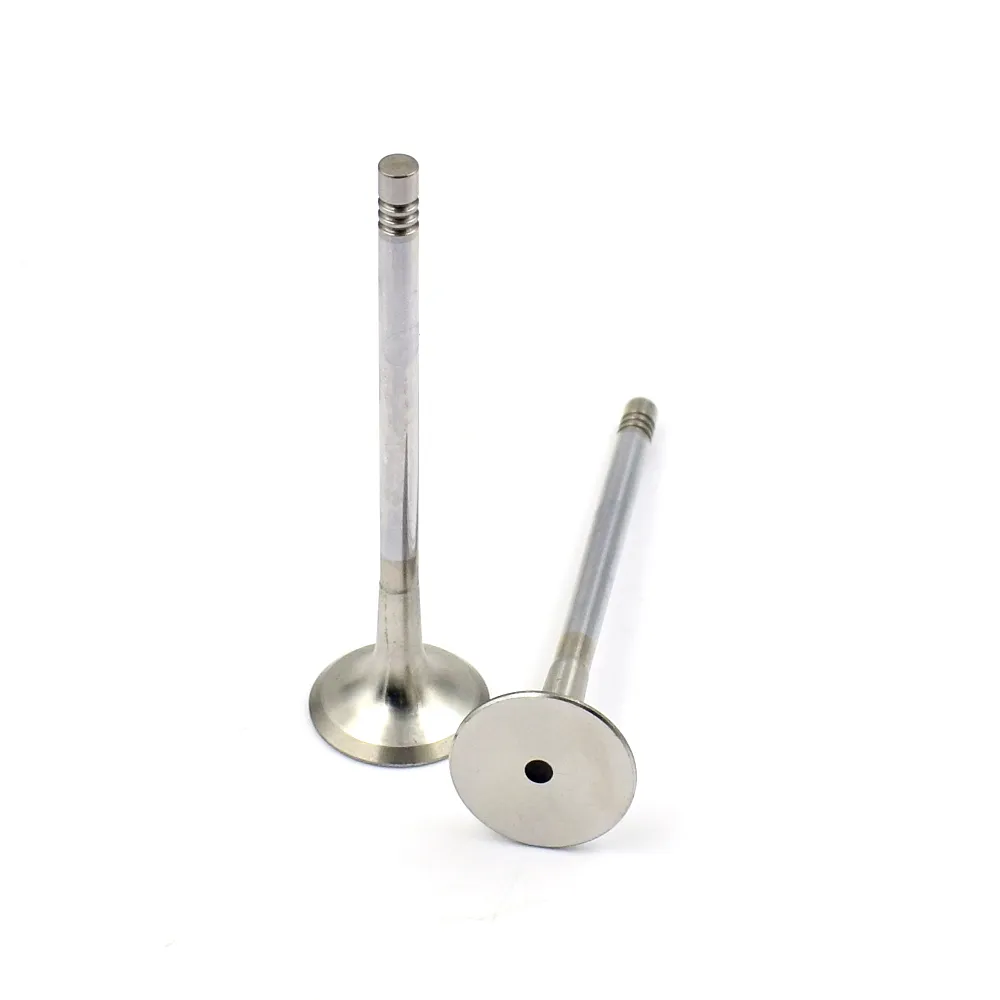
Engine intake and exhaust valve head geometry and sealing face contact angle.
What Is the Difference Between EA113 and EA888?
Many repair shops confuse the earlier EA113 2.0 TFSI with the EA888 2.0 TSI/TFSI because Volkswagen used them across overlapping model years (e.g., Mk5 Golf GTI vs Mk6 Golf R).
| Feature | EA113 2.0 TFSI (BPY, CDL, BWA) | EA888 (Gen 1 / Gen 2 / Gen 3) |
|---|---|---|
| Camshaft Drive | Rubber timing belt + short internal chain | Full dual overhead chain drive from crank |
| HPFP Actuation | Flat friction cam follower (high wear risk) | Durable roller follower on high-pressure pump |
| Oil Filter Position | Underneath engine cartridge housing | Top-mounted upright filter housing |
| Balance Shafts | Housed in oil pump module inside oil pan | Integrated inside cylinder block casting |
| Valvetrain Parts | EA113-specific valve guides and stems | EA888-specific valvetrain hardware |
How Does EA888 Gen 4 (Evo4) Differ From Gen 3?
Introduced around 2020 on Mk8 Golf GTI, Golf R, Audi S3 (8Y), and Cupra models, the EA888 Gen 4 (Evo4) represents the latest evolution of the EA888 platform:
- Ultra-High Fuel Pressure (350 Bar): While Gen 3 operated direct injection at ~200 bar, Gen 4 bumps direct injection pressure to 350 bar (5,076 psi). To comply with strict Euro 6d emissions, Gen 4 drops port injection (MPI) on most performance applications, relying on ultra-fine direct-spray atomization.
- Turbocharger Suppliers: Gen 3 relied primarily on IHI units (IS12, IS20, IS38). Gen 4 switches to Garrett turbos on standard GTI models and high-output Continental turbos on Golf R and Audi S3.
- Advanced Engine Management: Gen 4 migrates from Continental Simos 18 to the high-speed Simos 19 ECU platform with integrated knock detection and particulate filter (GPF) thermal loops.
What Should You Check Before Ordering EA888 Engine Valves?
For engine rebuilders and parts wholesalers, a wrong generation means an incorrect cylinder head fitment and costly returned shipments. Always confirm these four items before submitting an inquiry:
- Engine Code: For example
CCTA,CAEB, orCHHB, rather than just generic "2.0 TSI" or "2.0 TFSI" - OE Valve Part Number: Taken directly from the old valve, the electronic parts catalogue (ETKA), or your customer's rebuild order
- Intake or Exhaust Split: Specify both if you overhaul a complete head; one EA888 16-valve cylinder head requires 8 intake and 8 exhaust valves
- Quantity and Destination Market: So our sales engineering team can confirm immediate stock, export packaging, and freight lead time
TOPU manufactures and stocks OE-grade replacement intake and exhaust valves for both EA888 Gen 2 and Gen 3 platforms. Send us your OE number or a sample photo and our technical department will cross-reference it before quoting.
Technical References & VAG Self-Study Programmes
To verify detailed metallurgical and internal architectural changes, consult the official factory Volkswagen/Audi Self-Study Programmes (SSP):
- Audi SSP 384: Audi Chain-Driven 1.8L 4V TFSI Engine: Details Gen 1 architecture, 8-counterweight crankshaft, balance shafts, and intake VVT.
- VW SSP 401: 1.8L TFSI 16V Engine: Factory overview of Gen 1 timing chain drive and crankcase ventilation.
- Audi SSP 436: Changes to the 4-Cylinder TFSI Engine (EA888 Gen 2): Covers Audi Valvelift System (AVS), reduced 52 mm crank journals, and revised breather systems.
- Audi SSP 606 / eSSP 920243: EA888 1.8L & 2.0L Gen 3 Engines: Comprehensive technical teardown of the integrated exhaust manifold (IEM), dual injection, electric wastegate, and 4-counterweight crankshaft.
Request EA888 Valve Samples and a Factory Quote
Whether you are rebuilding customer engines or stocking high-demand European automotive inventory, TOPU manufactures OE-grade replacement intake and exhaust valves built to exact factory dimensional tolerances and metallurgical specifications.
Send us your required engine code, OE part number, intake/exhaust split, and target quantity. Our engineering and sales team will cross-reference your application and provide competitive factory-direct pricing. Browse all TOPU engine components to explore our complete OEM and aftermarket manufacturing capabilities.