Introduction
Intake valves are the front gate of your engine's breathing system. Every time your engine fires, these precision-engineered components open to draw in the exact mixture of air and fuel needed for combustion — then seal shut to withstand explosive pressures exceeding 1,000 PSI.
When intake valves function properly, your engine delivers smooth power, optimal fuel efficiency, and clean emissions. When they don't — through carbon buildup, leaking, or wear — performance degrades rapidly, and repair costs escalate.
Whether you're an automotive engineer specifying OEM components, a parts distributor evaluating suppliers, or a mechanic diagnosing engine problems, this guide covers everything you need to know about intake valves. At TOPU, we've manufactured millions of intake valves over two decades, and we're sharing our expertise to help you make informed decisions.
What Are Intake Valves?
Definition and Basic Function
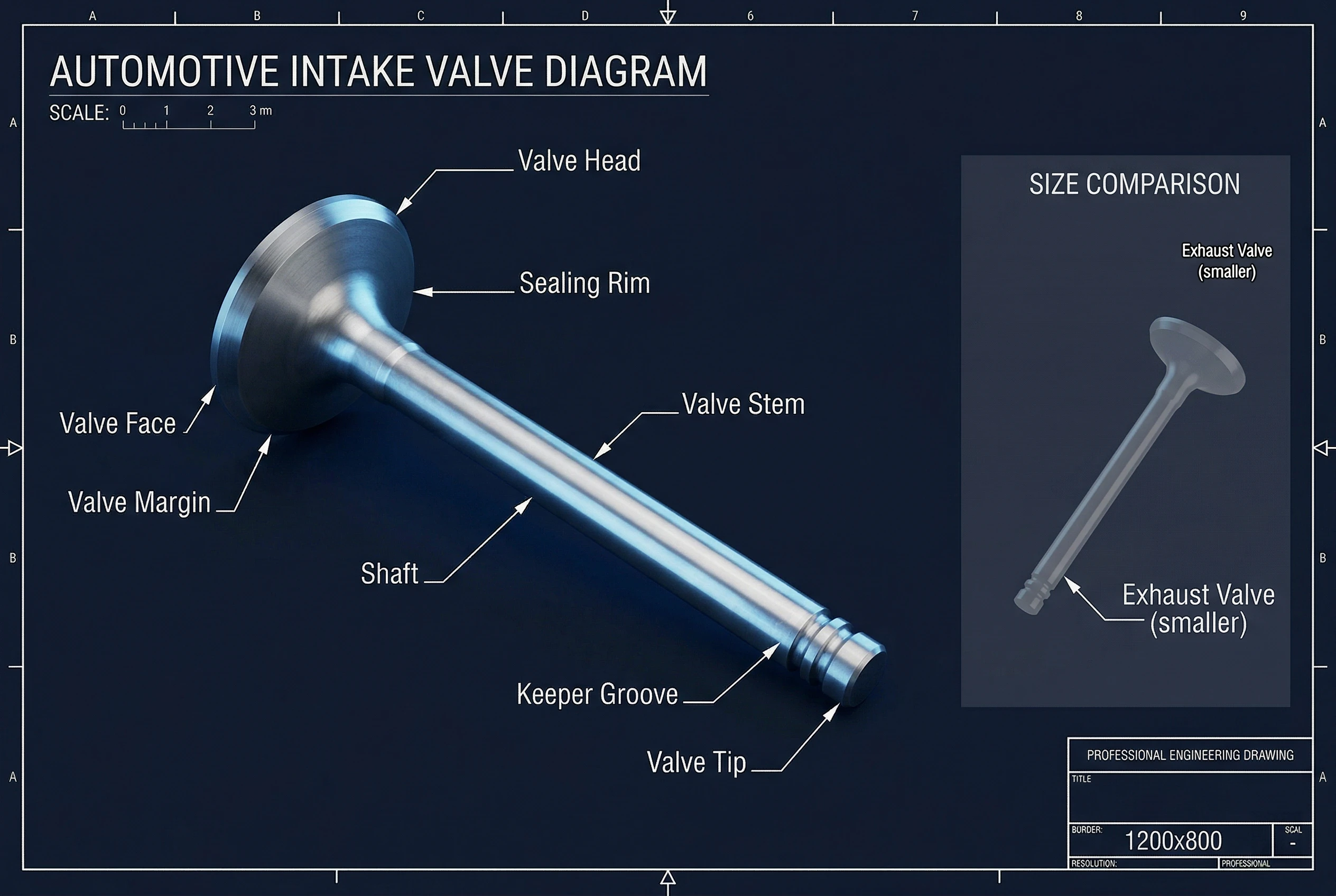
An intake valve is a poppet-style mechanical valve located in the cylinder head of an internal combustion engine. Its primary function is to control the flow of the air-fuel mixture (in port injection engines) or air alone (in direct injection engines) into the combustion chamber.
Intake valves work as one-way gatekeepers — they open during the intake stroke to allow fresh charge into the cylinder, then close tightly to seal the combustion chamber during compression, combustion, and exhaust strokes. The seal must be gas-tight to maintain compression pressure and prevent power loss.
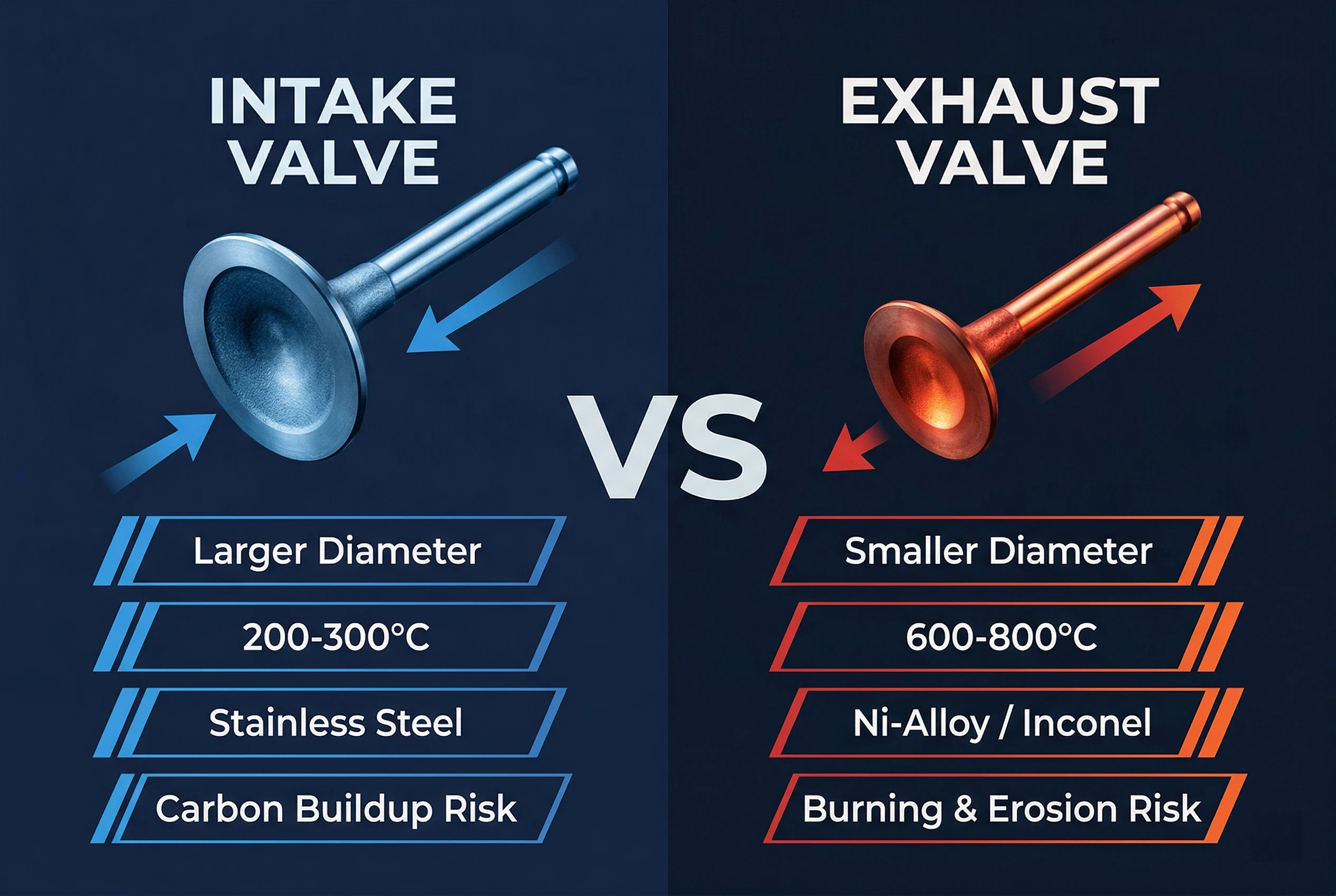
Several key characteristics distinguish intake valves from their counterpart, exhaust valves. First, intake valves are larger in diameter — typically 10-15% bigger than exhaust valves in the same engine, because it takes more effort to pull air in than to push exhaust out. Second, they operate at significantly lower temperatures, around 200-300°C (392-572°F) compared to 600-800°C for exhaust valves, since the incoming fresh air charge actively cools the valve with every intake stroke. This lower thermal stress means intake valves have different material requirements — standard stainless steel alloys are sufficient for most applications, whereas exhaust valves demand heat-resistant superalloys like Inconel to survive.
For a comprehensive overview of both valve types and how they work together, see our Engine Valves Complete Guide.
Role in the Engine Cycle
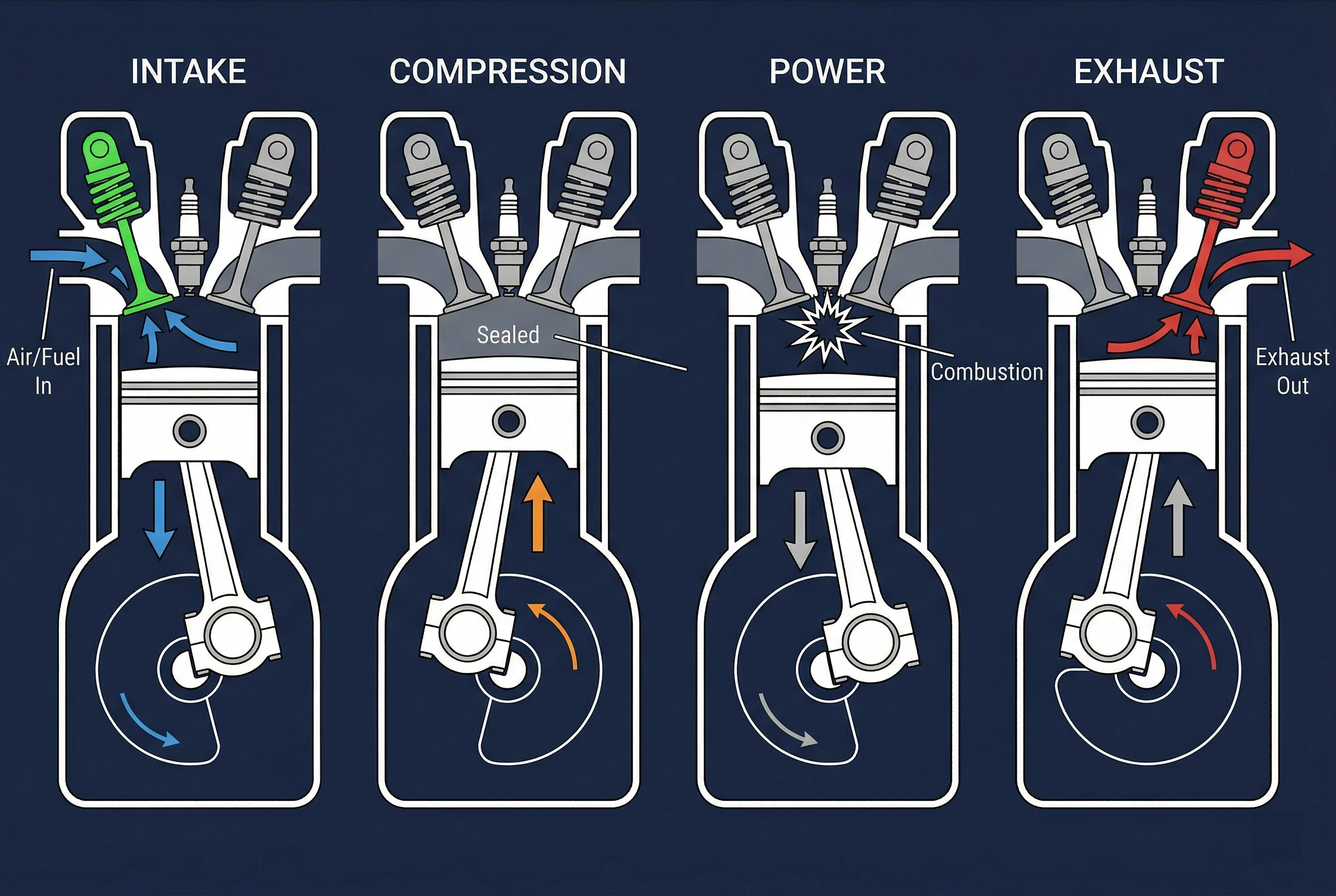
Intake valves play a starring role in the four-stroke combustion cycle, and their precise operation in each phase determines how well your engine performs.
During the intake stroke, the camshaft lobe pushes against the lifter and opens the intake valve. As the piston moves downward, it creates a partial vacuum inside the cylinder, and fresh air-fuel mixture rushes through the open intake valve to fill the combustion chamber. Near the bottom of the piston's travel, the intake valve begins to close.
In the compression stroke, the intake valve seals completely. The piston reverses direction and moves upward, compressing the trapped air-fuel mixture to ratios typically between 10:1 and 14:1 in modern engines. Any leakage past the intake valve during this phase means lost compression and reduced power — which is why a perfect seal is non-negotiable.
The power stroke demands that the intake valve remain sealed against the most extreme conditions. The spark plug ignites the compressed mixture (or compression ignition occurs in diesel engines), and the resulting explosive combustion forces the piston downward with pressures exceeding 1,000 PSI. Throughout this entire stroke, the intake valve must withstand these forces without any gas leakage.
Finally, during the exhaust stroke, the exhaust valve opens to expel burned gases while the intake valve stays closed. However, near the very end of this stroke, the intake valve begins to open slightly. This brief period when both valves are partially open simultaneously is called valve overlap, and it serves a critical purpose: it helps scavenge remaining exhaust gases from the cylinder and improves the filling efficiency for the next intake stroke.
Valve Timing and Overlap
The precise timing of when the intake valve opens and closes relative to piston position is critical for engine performance. Modern engines address this challenge through Variable Valve Timing (VVT) systems that dynamically adjust intake valve timing based on operating conditions.
At low RPM, VVT systems close the intake valve earlier, trapping more of the air-fuel mixture in the cylinder for improved low-end torque. At high RPM, the system delays intake valve closing to take advantage of the incoming air's momentum, allowing more charge into the cylinder for maximum power output. During partial throttle cruising, the timing is optimized specifically for fuel economy. VVT systems can adjust intake valve timing by 40-60 degrees of camshaft rotation, which dramatically improves engine flexibility across the entire operating range.
Learn more in our Variable Valve Timing guide.
How Intake Valves Work
Valve Opening and Closing Mechanism
Intake valves don't operate independently — they are part of a precisely engineered system called the valve train, where every component must work in perfect harmony.
The process begins with the camshaft, which rotates at exactly half the crankshaft speed. Each cam lobe has a carefully designed profile that determines three critical parameters: how far the valve opens (lift), how long it stays open (duration), and exactly when it opens and closes (timing). As the cam lobe rotates, it pushes against a valve lifter (tappet), initiating the chain of motion.
In overhead valve (OHV) engines, the lifter's motion transfers upward through a pushrod to a rocker arm, which pivots and pushes down on the valve stem. In overhead cam (OHC) engines, the camshaft sits directly above the valves, and the cam acts on the valve more directly through a follower or finger rocker. Either way, the result is the same: the valve stem is pushed downward, compressing the valve spring and opening the valve. A typical intake valve opens between 8-12mm of lift.
When the cam lobe rotates past its peak, pressure is released and the compressed valve spring pushes the valve firmly back to its closed position. The precision-machined valve face seats against the valve seat in the cylinder head, creating a gas-tight seal. Even microscopic imperfections on either surface can cause measurable compression loss.
This entire cycle happens up to 3,000 times per minute at highway speeds — each intake valve opens and closes roughly 25 times every second, which is why manufacturing precision and material quality are absolutely critical.
Valve Timing and Performance
The relationship between intake valve timing and engine performance is profound, and understanding it explains why modern engines have become so much more efficient and powerful.
Timing Parameter | Effect on Performance |
|---|---|
Early Intake Valve Opening (IVO) | Better cylinder filling at high RPM, but potential exhaust reversion at low RPM |
Late Intake Valve Closing (IVC) | Utilizes intake charge momentum at high RPM, but reduces low-speed efficiency |
Increased Valve Lift | Greater airflow capacity, but higher valve train stress |
Longer Duration | More time for air to enter, benefits high-RPM power, but can hurt idle quality |
Modern VVT systems elegantly solve this traditional compromise by adjusting these parameters in real-time, delivering both strong low-end torque and high-RPM power from the same engine — something that was impossible with fixed valve timing.
Valve lash (clearance) is equally important for proper intake valve function. If the clearance is too tight, the valve cannot close fully, which leads to burned valve faces and compression loss over time. If the clearance is too loose, the valve opens late and closes early, reducing airflow into the cylinder and producing an audible ticking noise. Engines equipped with hydraulic lifters self-adjust automatically, while those with solid lifters require periodic valve clearance adjustment as part of routine maintenance.
Types of Intake Valves
By Material
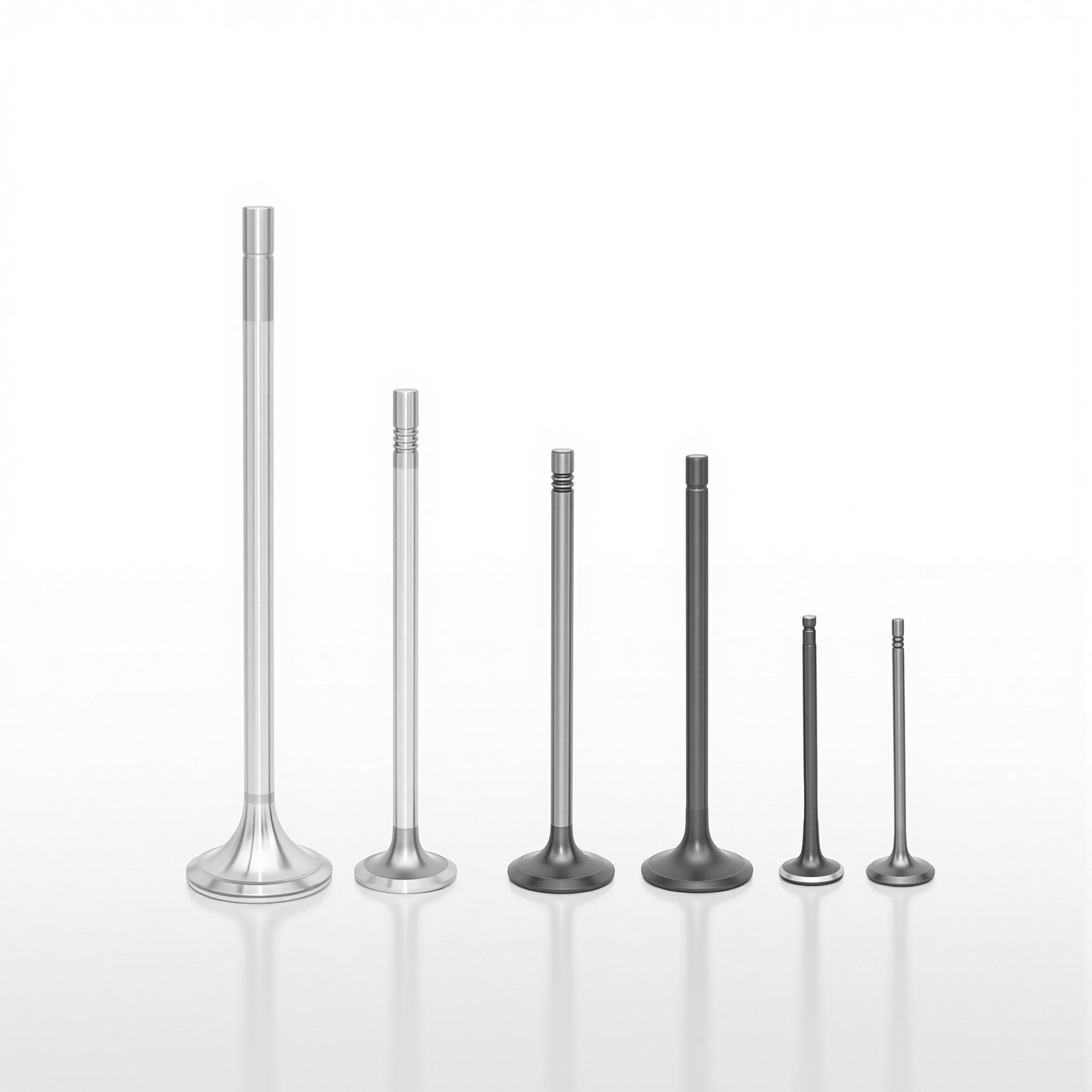
The most widely used intake valve material is martensitic stainless steel, which serves as the standard choice for the vast majority of passenger vehicles worldwide. It offers good corrosion resistance and adequate mechanical strength at operating temperatures up to 300°C, while remaining cost-effective for high-volume production. Common grades include 4Cr9Si2 (SUH1) and 4Cr10Si2Mo (SUH3).
For turbocharged applications where intake charge temperatures run higher than normal, austenitic stainless steel provides enhanced high-temperature performance and better fatigue resistance at elevated temperatures. The most common grade in this category is 5Cr21Mn9Ni4N (21-4N), which is also widely used for exhaust valves.
At the high end of the spectrum, titanium alloys represent the ultimate in intake valve technology. Titanium valves weigh approximately 40% less than their steel equivalents, which dramatically reduces valve train inertia and enables higher RPM capability without the risk of valve float. However, their significantly higher cost and the need for specialized anti-galling coatings limit their use primarily to racing engines and premium sports cars where every gram of reciprocating mass matters.
For detailed material specifications, see our Valve Materials Guide.
By Design
Intake valve designs have evolved to optimize airflow and sealing performance. The standard flat-head valve remains the most common design, suitable for the majority of production engines. Tulip-head valves feature a concave underside that improves airflow characteristics as gases pass over the valve head, making them popular in performance applications.
Multi-angle valve seats represent an important advancement in valve design. By machining three or five precisely angled cuts into the valve face instead of a single angle, engineers create a smoother transition for incoming air, reducing turbulence and improving volumetric efficiency. Some specialized applications also use sodium-filled valves, which feature a hollow stem partially filled with metallic sodium. During operation, the sodium melts and acts as an internal coolant, transferring heat away from the valve head more efficiently — though this design is far more common in exhaust valves than intake valves.
By Application
The application determines the optimal combination of material and design. Passenger vehicle intake valves prioritize durability and cost-effectiveness, typically using standard martensitic steel engineered to last the life of the vehicle under normal driving conditions. Commercial vehicle intake valves require heavier-duty construction to handle the higher accumulated mileage, greater thermal loads, and sustained operation demands of trucks and buses. Performance and racing intake valves push the boundaries with lightweight titanium construction, specialized surface coatings, and aggressive port profiles designed to maximize airflow at extreme RPM levels.
Common Intake Valve Problems
Carbon Buildup
Carbon buildup is the single most common intake valve problem in modern engines, and it's getting worse as direct injection technology becomes the industry standard.
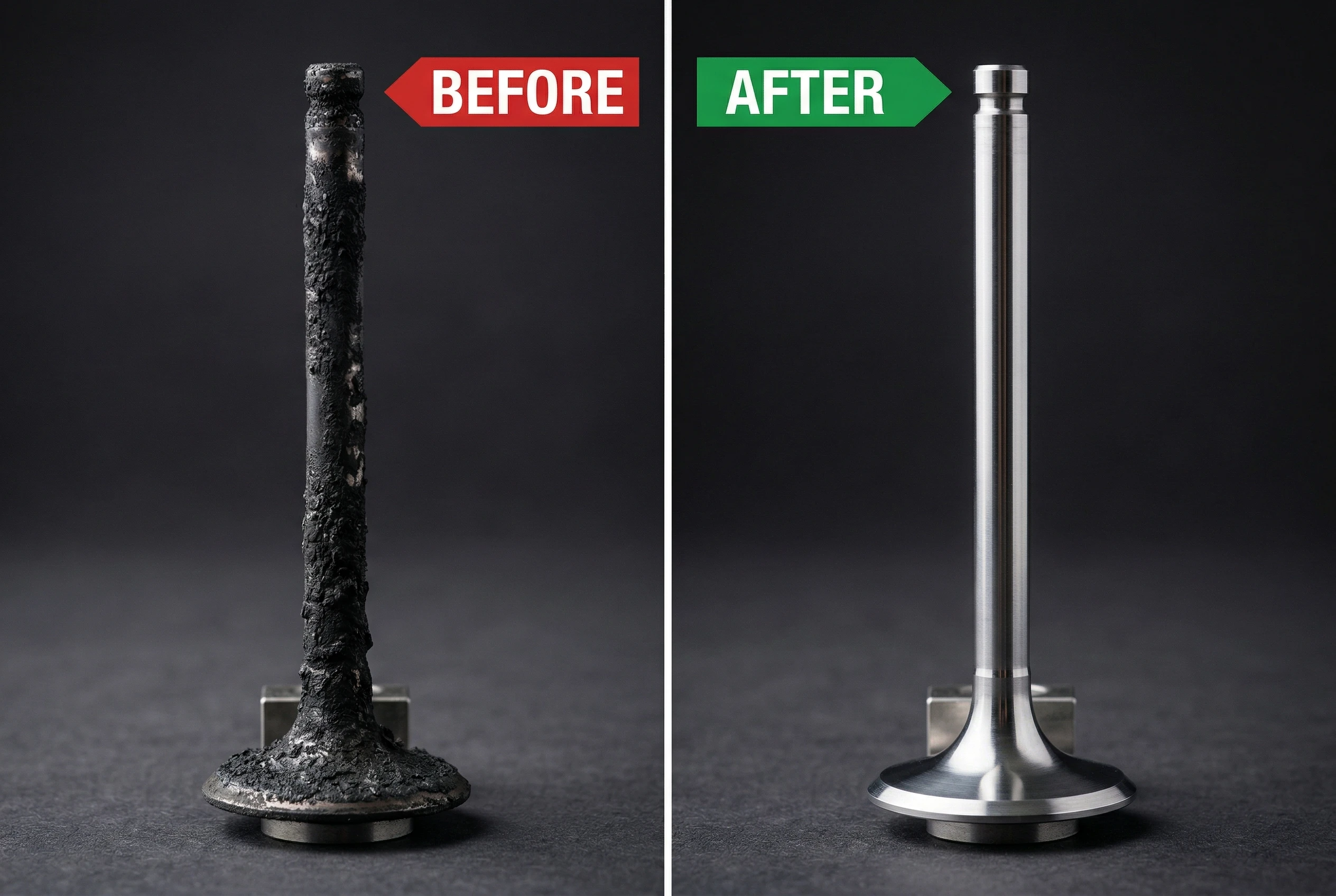
In traditional port-injection engines, fuel was sprayed onto the back of the intake valve before entering the combustion chamber. This fuel acted as a natural solvent, continuously washing away carbon deposits with every injection cycle. Modern gasoline direct injection (GDI) engines changed this fundamentally — fuel is injected directly into the combustion chamber, bypassing the intake valve entirely. Without this cleaning effect, oil vapors from the engine's crankcase ventilation (PCV) system bake onto the valve's hot backside, building up thick layers of hardened carbon deposits over thousands of miles.
Several factors accelerate this buildup. Low-quality fuel with fewer detergent additives provides less protection against deposits. Frequent short trips that prevent the engine from reaching full operating temperature allow incomplete combustion residues to accumulate. Extended idling periods generate low combustion temperatures that encourage carbon formation rather than burning it away.
The symptoms of carbon-fouled intake valves are often mistaken for other engine problems. Drivers typically notice a progressively rougher idle, sluggish acceleration response, and declining fuel economy — often a 5-15% increase in consumption. As deposits worsen, the check engine light may illuminate with misfire codes (P0300 through P0308), cold starts become increasingly difficult, and overall engine power drops noticeably.
If left unaddressed, severe carbon buildup can restrict airflow through the intake valve by up to 40%, significantly degrading engine performance. In extreme cases, large carbon chunks can break free and cause physical damage to valves, pistons, or the catalytic converter — turning a routine cleaning job into a major repair.
For cleaning solutions, see the next section or our detailed Valve Cleaning Guide.
Valve Leaking
When an intake valve fails to seal properly against its seat, combustion gases escape during the compression and power strokes, directly reducing engine performance. This problem typically develops gradually as the valve face and seat wear over high mileage, but it can also occur suddenly if a valve is bent — which commonly happens during timing belt or chain failure when the piston contacts an open valve.
Other causes include valve face erosion from detonation or pre-ignition events, carbon deposits that physically prevent the valve from closing fully, and incorrect valve lash that allows the valve to remain slightly open when the engine reaches operating temperature and components expand.
Drivers with leaking intake valves typically experience low compression in the affected cylinder, noticeable power loss, backfiring through the intake manifold, rough idle, persistent misfires, and failed emissions tests. Diagnosis is straightforward: a standard compression test reveals low pressure in the affected cylinder, and a follow-up leak-down test confirms the source. When you pressurize the cylinder and hear air escaping through the intake manifold, the intake valve is the confirmed culprit.
For a comprehensive diagnostic walkthrough, see our Valve Problems Guide.
Valve Stem Seal Failure
The rubber seals fitted around each intake valve stem serve a critical function: they prevent engine oil from migrating down the valve guide and into the combustion chamber. Over years of exposure to high heat and constant mechanical cycling, these seals gradually harden, develop cracks, and eventually fail.
The most telltale symptom is blue-gray smoke from the exhaust, which is most noticeable on startup after the vehicle has been sitting overnight, or after extended idling at a traffic light. As the seals deteriorate further, oil consumption increases gradually, spark plugs become oil-fouled, and the vehicle begins failing emissions tests due to elevated hydrocarbon readings.
The good news is that replacing valve stem seals is significantly less expensive than replacing the valves themselves, and in many engines it can be done without removing the cylinder head. Learn more in our Valve Seal Guide.
Intake Valve Cleaning Methods
Why Clean Intake Valves?
Regular intake valve cleaning is not just about restoring lost performance — it's about protecting your engine investment. Carbon deposits that restrict airflow force the engine to work harder, consuming more fuel and generating higher emissions. Removing these deposits can recover 5-15% of lost power, restore optimal fuel economy, reduce harmful exhaust output, and prevent the kind of severe buildup that leads to expensive valve and engine repairs. For GDI engine owners, proactive valve cleaning is as essential as regular oil changes.
Cleaning Methods

Chemical fuel additives are the simplest and least expensive option at $10-30 per treatment. Products like Techron and Sea Foam are poured directly into the fuel tank, requiring no tools or technical knowledge. They're reasonably effective at preventing light deposits in port-injection engines where fuel contacts the intake valves, but they have limited impact on GDI engines because the fuel never reaches the intake valve surfaces. Best used as a preventive measure rather than a cure for established buildup.
Intake system spray cleaners represent the next level of intervention, typically costing $100-200 as a professional service. A technician sprays chemical cleaner directly into the intake manifold while the engine is running, allowing the solvent to contact the back of the intake valves. This method is more effective than fuel additives for moderate deposits and doesn't require engine disassembly, though stubborn buildup may require multiple treatments with mixed results.
Walnut shell blasting is widely regarded as the gold standard for GDI engine intake valve cleaning, costing $200-400 at a professional shop. Finely crushed walnut shells are blasted at high pressure onto the valve surfaces through the intake ports, which effectively removes even heavy, baked-on carbon deposits without damaging the underlying metal. This method requires specialized equipment and trained technicians, and is recommended every 30,000-50,000 miles for GDI engines. For most GDI owners, walnut blasting represents the best balance of effectiveness and cost.
Manual cleaning is the most thorough but also the most involved and expensive option at $400-800. It requires complete removal of the cylinder head for direct access to the valves, where technicians can physically clean, inspect, and service every component. This approach is necessary for extremely severe carbon buildup and has the added advantage of allowing simultaneous inspection and replacement of valve seals, guides, and other wear items. It's best reserved for cases of extreme neglect or combined with other major engine service during an overhaul.
Prevention Tips
Preventing carbon buildup is always more cost-effective than removing it. Using Top Tier rated fuel ensures higher levels of detergent additives that help keep intake passages cleaner. Regular highway driving at sustained higher RPMs generates the combustion temperatures needed to burn off light carbon deposits before they harden. For GDI engines specifically, installing an oil catch can in the PCV line intercepts oil vapors before they reach the intake valves — a simple and popular aftermarket modification that directly addresses the root cause. Using a quality fuel system cleaner every 5,000-10,000 miles provides an additional layer of prevention, and avoiding excessive idling whenever possible reduces the low-temperature combustion conditions that promote carbon formation.
Intake Valve Maintenance Tips
Proactive maintenance extends intake valve life significantly and prevents the kind of unexpected breakdowns that leave you stranded and facing expensive repairs.
Valve clearance inspection should be performed every 60,000-100,000 miles, following your manufacturer's specific recommendation. Engines with solid or mechanical lifters require periodic manual adjustment to maintain proper clearance as components wear. Engines equipped with hydraulic lifters are designed to self-adjust automatically, but they should still be inspected periodically to confirm they're functioning properly — a collapsed or stuck hydraulic lifter can cause just as much damage as an improperly adjusted solid lifter.
Listening to your engine provides valuable early warning of developing problems. A rhythmic ticking sound emanating from the cylinder head area often indicates incorrect valve clearance that needs adjustment. A hissing sound audible under load may signal a leaking intake valve. Any unusual noise from the engine's top end warrants prompt professional diagnosis before a minor adjustment becomes a major repair. See our Valve Noise Guide for more details.
Engine oil quality directly impacts intake valve longevity. Fresh, high-quality oil provides proper lubrication to valve stems and guides, preventing accelerated wear. As oil degrades, it loses its protective properties and produces more of the deposits that contribute to carbon buildup. Always follow the manufacturer's recommended oil grade and change interval — and consider upgrading to full synthetic oil, which offers superior protection under high-temperature conditions and resists breakdown longer than conventional oils.
Fuel selection matters more than many drivers realize. Higher-quality fuel with robust detergent packages reduces carbon deposit formation throughout the intake system. Using a lower octane than your manufacturer specifies can cause detonation — abnormal combustion events that create destructive pressure waves capable of damaging valve faces over time. Choosing Top Tier certified fuel when available provides additional valve-cleaning detergent additives beyond the minimum government requirements.
Minimizing excessive idling is another simple but effective strategy. Extended idle periods generate low combustion temperatures that promote carbon accumulation on intake valves. If frequent idling is unavoidable due to your driving patterns — such as urban delivery driving or long warm-up periods in cold climates — compensate by periodically driving at sustained highway speeds to burn off accumulated deposits.
Finally, know when replacement becomes necessary. Intake valves should be replaced when they show significant burning or erosion on the valve face, when stems are bent (typically from timing belt or chain failure), when wear exceeds manufacturer specifications, or as a standard part of a comprehensive engine rebuild beyond 200,000 miles. Attempting to reuse damaged valves risks further engine damage that costs far more than new valves.
Intake Valves vs Exhaust Valves
Understanding the differences between intake and exhaust valves is essential because these differences determine why each valve type requires distinct materials, designs, and maintenance approaches.
Feature | Intake Valves | Exhaust Valves |
|---|---|---|
Primary Function | Draws air/fuel mixture into the combustion chamber | Expels hot combustion gases out to the exhaust manifold |
Operating Temperature | 200-300°C (392-572°F) | 600-800°C (1,112-1,472°F) |
Relative Size | Larger diameter (better airflow) | Smaller diameter |
Typical Material | Martensitic stainless steel | Austenitic steel, Inconel, nickel alloys |
Most Common Problem | Carbon buildup (especially in GDI engines) | Burning and erosion from extreme heat |
Cooling | Cooled by incoming fresh air charge | Minimal cooling — exposed to hottest gases |
Replacement Frequency | Less frequent | More frequent (harsher conditions) |
The fundamental difference comes down to thermal environment. Intake valves benefit from a natural cooling mechanism — every time they open, a rush of relatively cool air passes over them, carrying heat away. Exhaust valves have no such advantage; instead, they are exposed to the hottest gases in the engine immediately after combustion. This is why exhaust valves require expensive heat-resistant superalloys while intake valves can use standard stainless steel, and why exhaust valves typically fail first in engines that are otherwise well-maintained.
However, intake valves face their own unique challenge in the modern era: carbon buildup in GDI engines. While exhaust valves are relatively self-cleaning (hot exhaust gases tend to burn off deposits), intake valves in direct injection engines receive no fuel washing and accumulate carbon steadily over time. This has made intake valve maintenance a more significant concern than it was in the port-injection era.
For a detailed comparison, see our Exhaust Valves Guide.
Conclusion
Intake valves may be small components, but their impact on engine performance is enormous. They control the very first step of the combustion process — allowing your engine to breathe. When they're clean and properly maintained, your engine delivers the power, efficiency, and reliability it was designed for. When they're neglected, the consequences compound: reduced performance leads to wasted fuel, which leads to increased emissions, and eventually to costly mechanical failures.
The most important lesson from this guide is that proactive maintenance is far less expensive than reactive repair. Carbon buildup in modern GDI engines is not a question of "if" but "when" — and addressing it through regular walnut blasting or catch can installation costs a fraction of what a cylinder head service would. Regular oil changes, quality fuel, and timely valve clearance inspections round out a maintenance strategy that keeps intake valves performing optimally for the life of the engine.
Whether you need standard replacement intake valves for routine service, heavy-duty valves for commercial fleets, or high-performance titanium valves for racing applications, the quality of your valve choice directly determines your engine's longevity and performance.
Ready to Source Premium Intake Valves?
TOPU Engine Parts has been a trusted manufacturer of OEM-quality intake valves for over 20 years. Our IATF 16949:2016 certified facility produces intake valves for passenger vehicles, commercial trucks, and performance applications — shipped to customers in 50+ countries worldwide. Every valve we manufacture undergoes rigorous dimensional inspection, metallurgical testing, and quality verification before it leaves our facility.
📧 Request a Quote | 🌐 View Our Intake Valve Catalog | 📞 Contact Us