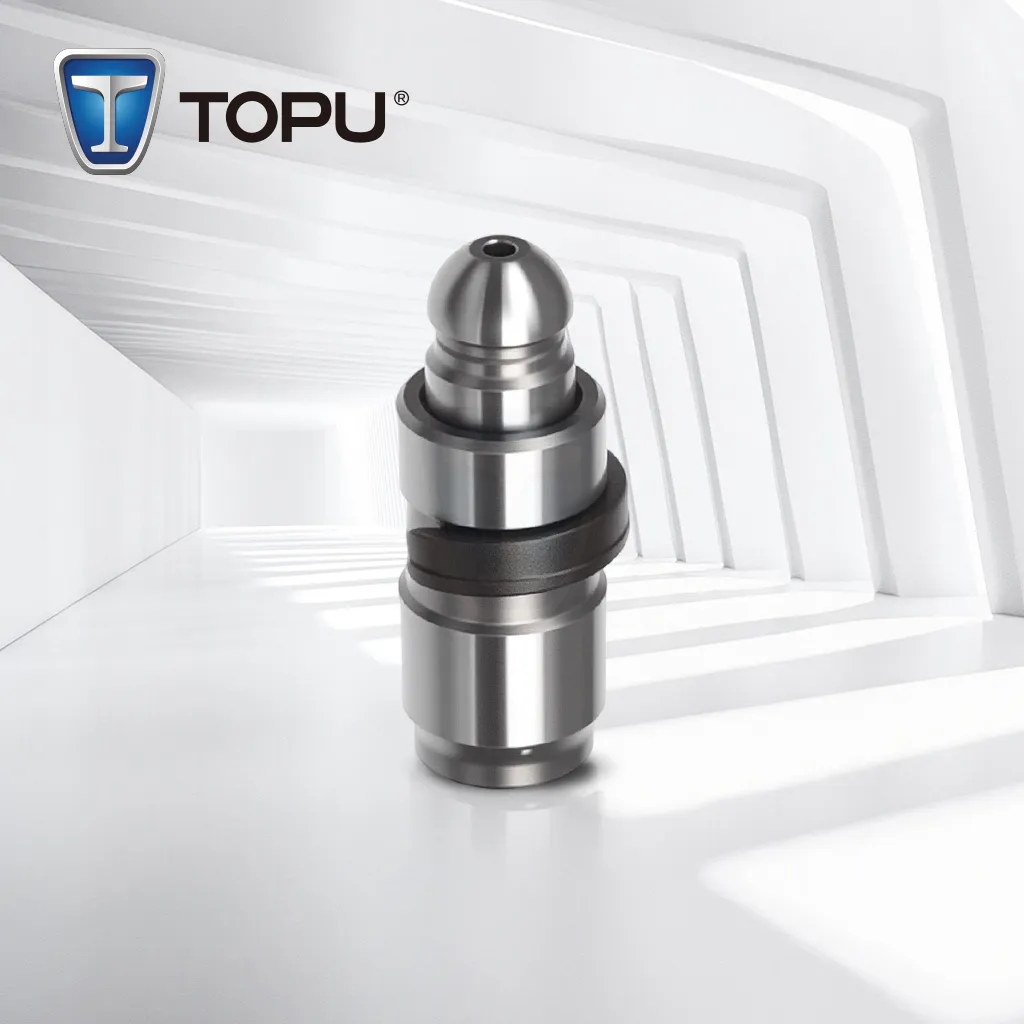
Common valve tappet problems usually appear as ticking noise, unstable valve lash, misfire, rough idle, or accelerated valvetrain wear. The cause may be the tappet itself, but oil condition, cam wear, and adjustment errors must be checked first.
Valve tappets and lifters transfer camshaft movement into valve motion. When they stick, collapse, wear, or lose oil pressure, the engine may become noisy and lose combustion efficiency.
Use this guide as a diagnosis checklist, then compare the symptoms with TOPU's valve lifter function guide and lifter tick vs exhaust leak guide before choosing replacement parts.
Excessive Wear and Its Effect on Valve Clearance
The tappets have a constant friction and high-pressure contact with the lobes of the camshaft. This causes the contact face of the tappet to wear inevitably with time. Over wear or over-rapid wear is a critical issue which directly disrupts valve timing and engine performance. The valve clearance varies as the tappet wears off. In non-hydraulic systems, the clearance normally goes up resulting in the noisy operating behavior as mentioned above, lower valve lift, and loss of engine power and efficiency.
Effects of uncontrolled wearing are not limited to noise. Poor clearance can lead to the opening of the valves late and closure early which disturbs the inlet and release of air and fuel in the engine respectively. This translates to low combustion, low fuel economy and high emissions. Cases may even cause camshaft lobe damage. Preventing premature wear is quite easy, consisting in regular lubrication, and tappets of hard, high-grade material, which is expected to endure in the most severe of engine conditions. Exceptional hardness and wear resistance is our production emphasis at Suzhou Topu, so that the tappets of our Suzhou can preserve accurate valve geometry and clearance throughout their working life and give your entire valve train the protection it deserves.
Oil Pressure Issues Linked to Hydraulic Tappet Failure
Hydraulic tappets are very delicate in regards to the health of the lubrication system of the engine. They use clean engine oil that is steadily supplied at the appropriate pressure in order to operate automatically. Thus, the problems of oil pressure and dysfunction of hydraulic tappet are often interrelated. The tappets are not receiving sufficient oil to keep the internal pressure up due to low oil pressure caused by pump failure, excessive clearance of the bearings, as well as a clogged oil filter. This gives rise to collapses and banging sounds.
On the other hand, oil pollutants are also one of the leading killers of tap hydraulics. The small oil passages within the tappet body may be blocked by dirt, metal particles and carbon sludge. When the tappet becomes clogged, it is unable to fill with oil or to empty it properly, and therefore sticks in a collapsed or a pumped-up position. A trapped collapsed tappet produces noise and decreases the valve lift, a trapped pumped-up tappet may leave a valve partially open, causing compression loss, backfiring, and possible contact of the valve with the piston. It is most important to maintain a good and clean lubrication system. In case of replacement, it is important to select hydraulic tappets by a manufacturer such as Suzhou Topu Engine Parts Co., Ltd. Our parts are designed to have a high metering of oil and reliable operation, so they will react properly to the oil pressure of the engine and will lead to the stable operation of the engine valve train.
Conclusively, it is important to listen to odd engine sounds, the effect of wear, and keep our oil system in good condition, as this would help in averting major valve train failures. When you require the replacement of the tappets or have a repair or overhaul of the engine, the type of the replacement tappets is a determining factor of the future performance and reliability of your engine. The benefits of a manufacturer specializing in sourcing and experienced in the field are that you would have parts that are designed to be durable and precise and therefore make your engine run smoothly and quietly further in the miles.