Los taqués de válvula actúan entre el árbol de levas y el resto del tren de válvulas, transformando el perfil de la leva en un movimiento controlado de las válvulas. Dependiendo de la configuración del motor, pueden ser taqués de acción directa, ajustadores hidráulicos compactos, elevadores de rodillos o taqués mecánicos.
TOPU suministra taqués y elevadores de válvulas para turismos, vehículos comerciales, vehículos de alto rendimiento y programas de repuestos. Analizamos cada solicitud según el número de pieza original, el código del motor, las dimensiones, la posición de lubricación y la geometría de funcionamiento, ya que dos piezas que parecen iguales pueden comportarse de forma muy diferente dentro del motor.
¿Qué es un taqué de válvula?
Un taqué de válvula es un componente del tren de válvulas que sigue el perfil del árbol de levas y transfiere la elevación hacia la válvula de admisión o de escape. El término se solapa con "levantador de válvula" y "seguidor de leva", aunque su diseño físico varía según la configuración del motor.
En un motor con árbol de levas en cabeza, el taqué puede estar situado directamente entre la leva y el vástago de la válvula. En un motor con seguidor de leva, un ajustador hidráulico compacto soporta el seguidor. En un motor con varillas de empuje, el taqué se encuentra en el bloque y transmite el movimiento a través de una varilla de empuje y un balancín.
Su función práctica consiste en preservar la elevación y la sincronización de la válvula previstas, al tiempo que controla la holgura, la tensión de contacto, el ruido y el desgaste.
Aplicaciones de los taqués de las válvulas principales
| Arquitectura del motor | Tipo común de taqué o elevador | Función principal | Detalles coincidentes |
|---|---|---|---|
| HCO/DOHC de acción directa | Taqué de cucharón sólido o hidráulico | Transfiere el movimiento de la leva directamente a la válvula. | Diámetro exterior, altura, calza o diseño hidráulico, acabado superficial |
| OHC con seguidor de dedo | ajustador hidráulico de holgura | Mantiene la holgura mientras soporta un rodillo o un seguidor de dedos. | Posición de alimentación de aceite, fuga del émbolo, geometría del asiento, número OE |
| Varilla de empuje/OHV | Elevador hidráulico o mecánico | Transmite el movimiento de la leva a través de la varilla de empuje y el balancín. | Diámetro del cuerpo, altura del asiento, diseño de rodillo/cara plana, compatibilidad de levas |
| Rendimiento y carreras | Taqués mecánicos, de rodillos o revestidos | Proporciona un movimiento de válvula controlado a mayor carga o RPM. | Perfil de leva, requisito de holgura, diseño de la rueda, material y recubrimiento. |
| Uso pesado y comercial | Taqué hidráulico o mecánico | Admite ciclos de trabajo prolongados y control de válvulas con mantenimiento. | Carga, lubricación, dureza, consistencia del lote, cobertura de la aplicación |
El número de pieza original y el código del motor nos proporcionan el mejor punto de partida. Si no están disponibles, TOPU puede revisar las dimensiones, los planos o una muestra aprobada para confirmar los conductos de aceite, la altura de trabajo, el recorrido del émbolo y la geometría de contacto.
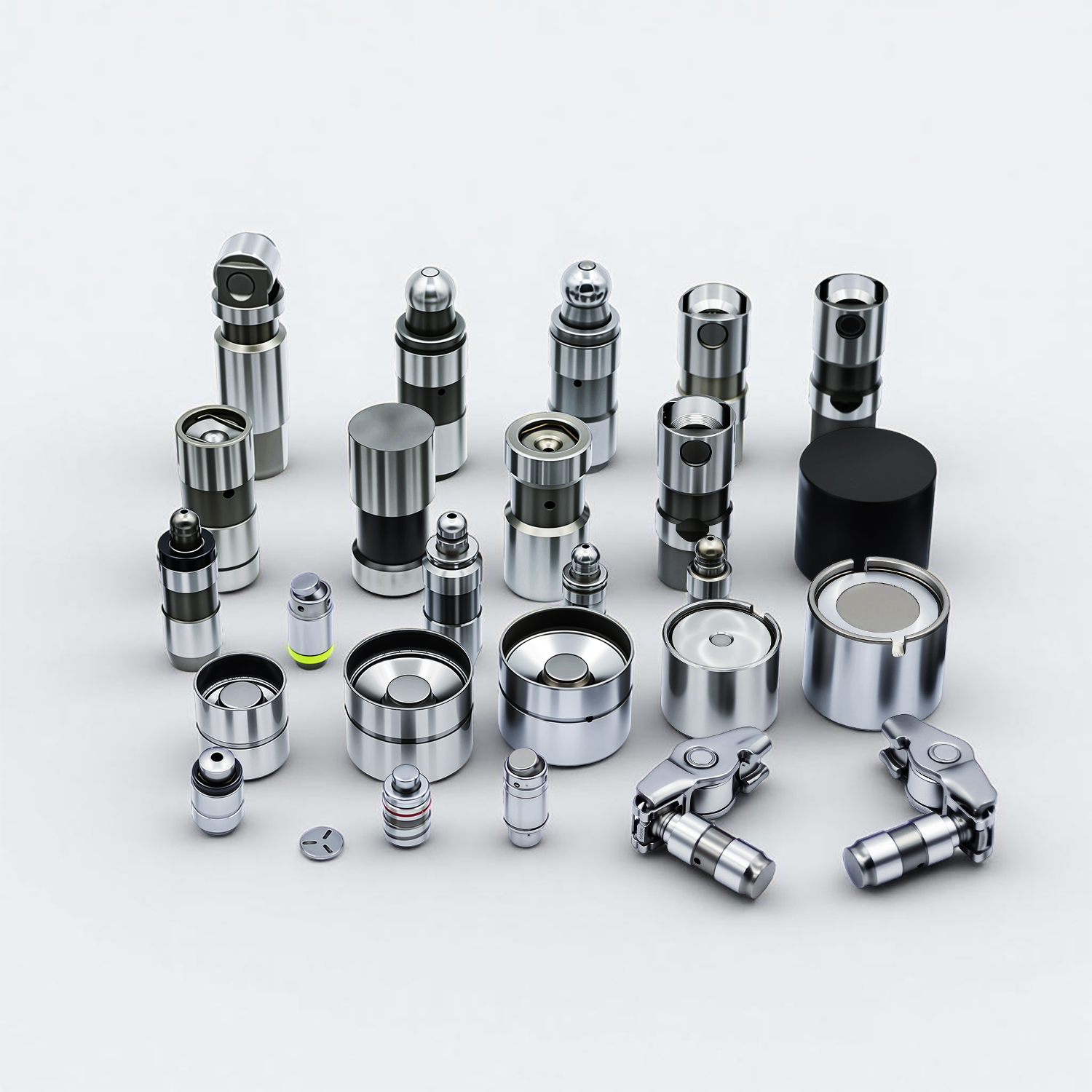
Taqués de cubo de acción directa
Los taqués de cubo son comunes en las culatas de cilindros con árbol de levas en cabeza porque crean un recorrido compacto y directo desde el árbol de levas hasta la válvula. El cubo se asienta sobre el muelle y el vástago de la válvula, y la leva actúa sobre su superficie superior.
Los cucharones macizos utilizan un espesor o calza específica para establecer la holgura de la válvula. Los cucharones hidráulicos incluyen un mecanismo interno lubricado con aceite que compensa automáticamente la holgura. Ambos diseños requieren un diámetro exterior, una altura, un acabado de la superficie de contacto y una compatibilidad con la aplicación precisos.
TOPU puede suministrar taqués de cucharón estándar y personalizados a partir de referencias de equipo original, planos o muestras aprobadas. Las conversaciones sobre proyectos pueden incluir el material, el tratamiento térmico, el recubrimiento DLC u otros requisitos de superficie, los elementos de inspección, el etiquetado y el embalaje para exportación.
Ajustadores hidráulicos de holgura y elevadores de válvulas
Los taqués hidráulicos utilizan la presión del aceite del motor para mantener la holgura de funcionamiento en el tren de válvulas. Contribuyen a un funcionamiento más silencioso y reducen la necesidad de ajustar la holgura periódicamente, pero el sistema interno de émbolo y válvula de retención debe retener el aceite correctamente.
Para los programas de distribución y reconstrucción, TOPU verifica más que las dimensiones externas. Nuestro análisis de muestreo puede abarcar fugas en el émbolo, ubicación de la alimentación de aceite, altura total, geometría del asiento y datos de intercambio de equipo original.
El aceite contaminado, la baja presión de aceite, la precarga incorrecta o el desgaste interno pueden provocar ruidos extraños, un bombeo retardado o un movimiento inestable de las válvulas. Por lo tanto, la pieza de repuesto debe ser compatible tanto con la aplicación del motor como con el diseño del sistema de distribución.
Aplicaciones de taqués de válvulas para Toyota y Lexus
Los motores Toyota y Lexus utilizan diversas configuraciones de distribución, por lo que la marca por sí sola no basta para identificar un taqué. Dependiendo de la familia del motor, la culata puede utilizar taqués de cubo, taqués hidráulicos o sistemas basados en seguidores.
TOPU ofrece una gama de taqués hidráulicos para válvulas de Toyota y Lexus que cubren referencias de equipo original como 13750-75020, 13750-31030, 13750-0Y010 y 13750-0V030 . Cuando nos envíe una consulta, confirmaremos la referencia con el código del motor, las dimensiones y los datos de muestra disponibles, en lugar de basarnos únicamente en la marca del vehículo.
Para un programa de Toyota/Lexus, TOPU puede ofrecer presupuestos basados en la lista de aplicaciones y proporcionar opciones de etiquetado individual, cajas con números de pieza mixtos, embalaje neutro o embalaje de marca propia, cuando estén disponibles.
Aplicaciones de taqués hidráulicos para BMW y MINI
Muchos motores BMW y MINI con árbol de levas en cabeza utilizan un ajuste hidráulico de la holgura de las válvulas dentro de un sistema de distribución con taqués. Estos componentes compactos dependen de un suministro de aceite estable y un control preciso del émbolo interno.
Para aplicaciones relacionadas con N12, N13, N14 y N16, TOPU suministra un taqué hidráulico para válvulas BMW/MINI que corresponde a la referencia OE 11 33 7 549 633. Si su programa BMW o MINI incluye referencias adicionales, envíenos la lista completa para que nuestro equipo pueda revisar la gama conjuntamente.
TOPU también puede revisar referencias y muestras de equipo original (OE) alternativas para una cobertura más amplia del mercado de repuestos BMW/MINI. Incluya el código del motor, la gama de vehículos, el número de pieza original (OE), la cantidad, el embalaje y el mercado de destino en su consulta para que podamos revisar la gama de manera eficiente.
Aplicaciones de taqués de válvulas para Volkswagen y Audi
Los motores Volkswagen y Audi también utilizan múltiples configuraciones de taqués hidráulicos, de balancín y de balancín. La compatibilidad exacta con las piezas originales es especialmente importante, ya que componentes de aspecto similar pueden pertenecer a diferentes generaciones de motores.
TOPU suministra un taqué hidráulico para válvula Volkswagen con referencia OE 038 109 309 C. Podemos combinar este artículo con otras referencias de VW/Audi en una misma solicitud y revisión de presupuesto.
Para un programa más amplio de VW/Audi, TOPU puede encargarse de la correspondencia de aplicaciones, la aprobación de muestras, la identificación de lotes, las cajas individuales y la planificación de cajas de exportación de acuerdo con la lista de piezas confirmada.
Cómo TOPU respalda los programas de taqués de válvulas
TOPU trabaja con distribuidores, talleres de reconstrucción de motores, marcas de repuestos y programas de desarrollo. Además de nuestra gama de válvulas para motores , nuestro programa de taqués puede abarcar:
- Opciones de taqués hidráulicos, mecánicos, de rodillos y de cucharón.
- Coincidencia del número de pieza original y del código del motor.
- Desarrollo personalizado basado en dibujos o muestras.
- Revisión del material, el tratamiento térmico, la dureza y el acabado superficial.
- Inspección funcional para diseños hidráulicos aplicables.
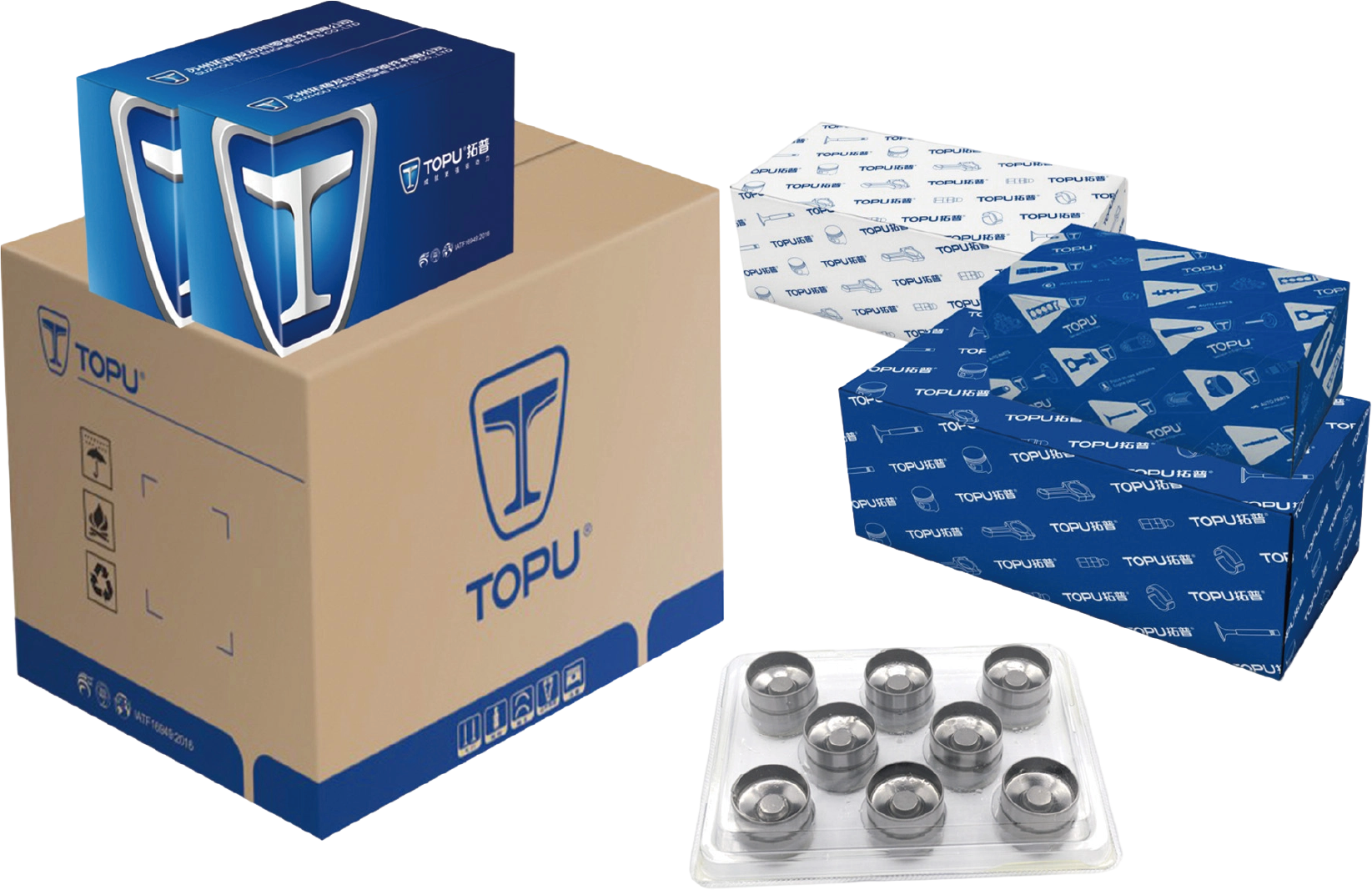
- Discusión sobre embalajes neutros, de marca o específicos para el proyecto.
- Planificación de pedidos al por mayor con diferentes referencias y cajas de exportación.
La documentación de calidad y los registros de inspección disponibles se confirman con el presupuesto de cada proyecto. TOPU opera dentro del marco de gestión de calidad automotriz administrado por IATF Global Oversight , y el ajuste y el rendimiento se controlan según las especificaciones y la aplicación acordadas para el pedido.
Preguntas frecuentes
P: ¿Se utilizan taqués de válvula en todos los motores modernos?
R: La mayoría de los motores utilizan un componente que realiza la función de taqué o seguidor de leva, pero el diseño puede ser un taqué de cubo, un ajustador de holgura hidráulico, un seguidor de rodillo o un elevador de varilla de empuje.
P: ¿Un taqué de válvula es lo mismo que un elevador de válvula?
A: Los términos suelen superponerse. En la práctica, en el mercado de repuestos, "taqué", "levantador" y "seguidor de leva" pueden describir componentes relacionados, pero la geometría exacta depende de la configuración del motor.
P: ¿Puede un mismo taqué servir para varias marcas de vehículos?
R: Algunas referencias de equipo original (OE) se repiten entre modelos o marcas, pero la compatibilidad debe confirmarse mediante el número de pieza original, el código del motor, las dimensiones, el diseño del sistema de lubricación y los datos de muestra.
P: ¿Qué información necesita TOPU para elaborar un presupuesto de taqués para válvulas?
A: Proporcione el número de pieza original, el código del motor, la aplicación del vehículo, el tipo de taqué, la cantidad prevista, los requisitos de embalaje, el mercado de destino y cualquier requisito de inspección o documentación.
P: ¿Puede TOPU desarrollar un taqué de válvula personalizado a partir de una muestra?
A: TOPU puede revisar planos o muestras aprobadas para proyectos personalizados. La viabilidad, el utillaje, la cantidad mínima de pedido (MOQ), las pruebas y el plazo de entrega se confirman tras la revisión técnica.
Envíenos su lista de taqués de válvulas
¿Está trabajando en una nueva gama de productos o en un programa de reemplazo? Envíe a TOPU sus números de equipo original (OE), códigos de motor, cantidades previstas, mercado de destino y requisitos de embalaje. Nuestro equipo buscará los artículos disponibles e identificará si se necesita un plano o una muestra antes de elaborar un presupuesto.
Si el mismo pedido incluye también válvulas de motor , incluya ambas listas de productos en una sola consulta. Esto nos ayuda a coordinar la revisión de la aplicación, las muestras, el embalaje y la planificación del envío para todo el programa de distribución. También puede consultar la gama completa de taqués de válvula TOPU antes de enviar la lista.
¿Listo para la comparación y el presupuesto?
Envíe su lista de equipos originales, la demanda anual, la solicitud de embalaje y el mercado de destino al equipo de TOPU.
Envíe su consulta