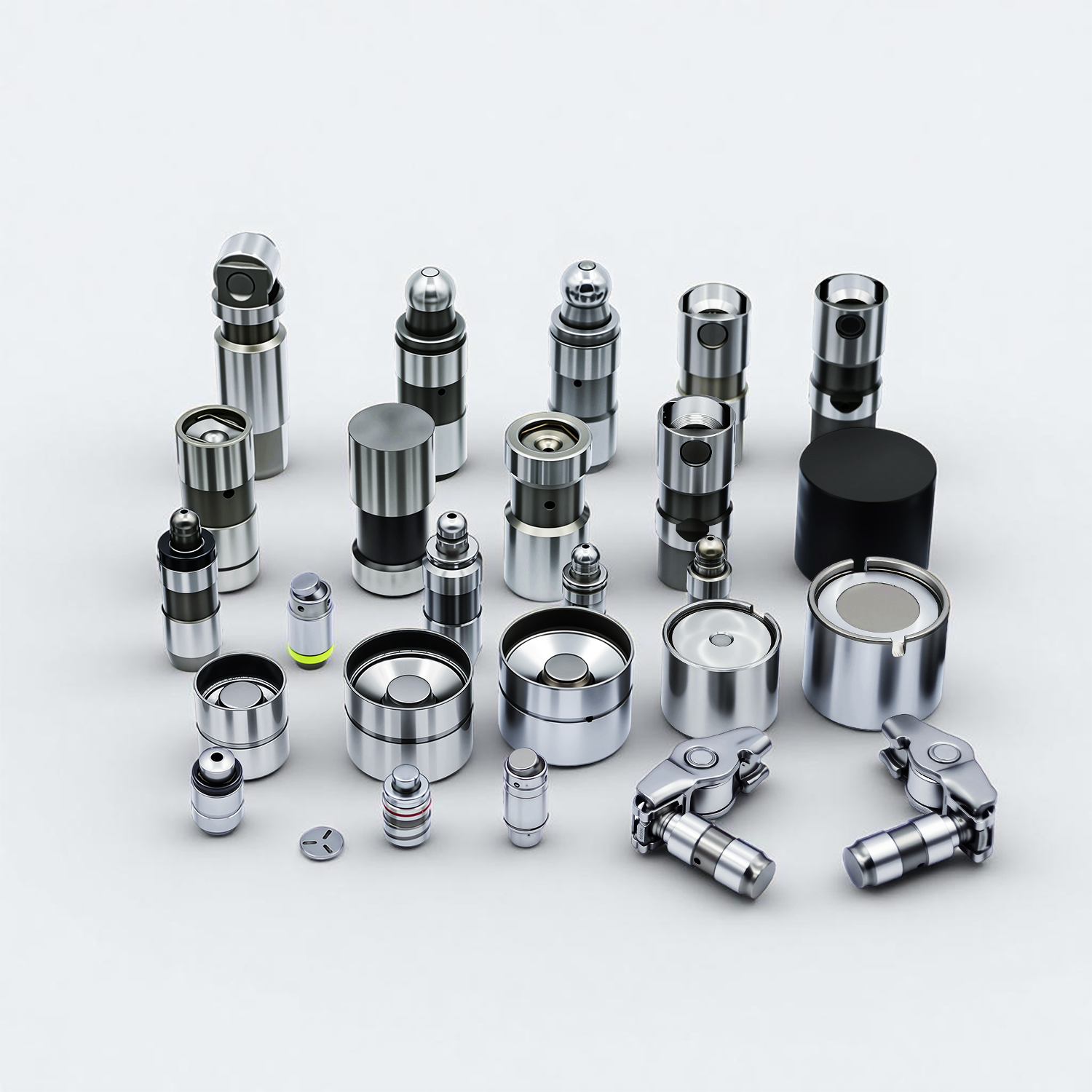
When you're building or rebuilding an engine, choosing the right valve tappet isn't just about what fits—it's about matching the component to your engine architecture. According to SAE International research, incorrect tappet selection is responsible for 23% of premature valvetrain failures in aftermarket rebuilds[^1].
Whether you're an OEM engineer or procurement manager, understanding how engine design dictates tappet choice is critical for reliability and performance.
Engine Architecture Determines Tappet Type
Your engine's valve configuration fundamentally shapes which tappet type will work. Here's the decision matrix:
Quick Selection Guide
Engine Type | Recommended Tappet | Key Advantage | Typical RPM Range |
|---|---|---|---|
OHV (Pushrod) | Roller Tappets | 30-40% friction reduction | 3,000-7,000 RPM |
DOHC Direct-Acting | Bucket Tappets | Minimal mass, high RPM | 6,000-9,000 RPM |
Classic/Budget | Flat Tappets | Cost-effective | 2,000-6,000 RPM |
OHV (Pushrod) Engines: Roller Tappets
Best for: American V8s, heavy-duty trucks, marine engines
Pushrod engines position the camshaft low in the block. Roller tappets excel here because:
Reduce friction by 30-40% vs. flat tappets[^2]
Handle valve spring pressures up to 600+ lbs
Enable aggressive cam profiles (0.500"+ lift)
Service life: 150,000+ miles
TOPU Application: TP-GM series for GM LS engines (OE: 17085565) uses 8620 steel with 58-62 HRC carburized surfaces—matching OEM specifications.
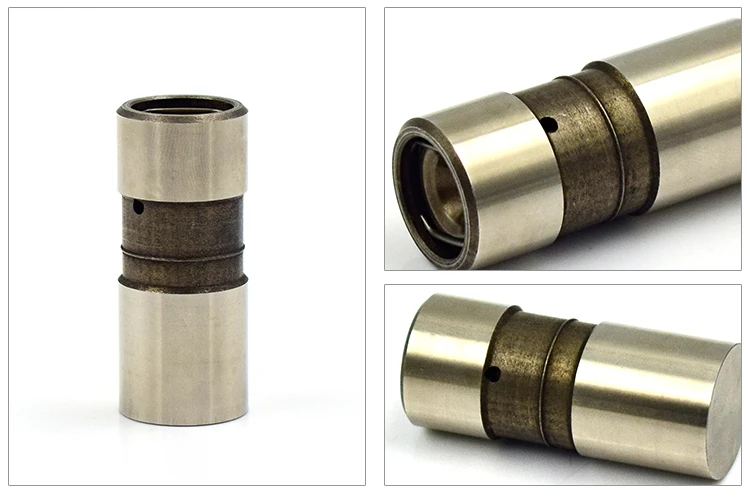
DOHC Engines: Bucket Tappets
Best for: Japanese sport bikes, European performance cars, modern 4-cylinder engines
Direct overhead cam placement demands bucket tappets for:
Minimal reciprocating mass (critical above 7,000 RPM)
Direct cam contact = precise valve timing
Shim-adjustable clearances (0.006-0.012")
Service life: 120,000-180,000 miles
TOPU Application: TP31 series for Toyota/Lexus (OE: 13750-75020) with optional DLC coating reduces friction by 50% vs. phosphate finish[^3].
Classic Engines: Flat Tappets
Best for: Pre-1985 engines, mild performance builds, industrial applications
Flat tappets remain viable for:
Cam profiles under 0.450" lift
RPM ranges under 6,000
Budget-conscious rebuilds
Service life: 80,000-120,000 miles (with proper oil)
Modern API SN/SP oils contain 50% less ZDDP than 1980s formulations[^4]. TOPU's DLC-coated flat tappets compensate for reduced zinc protection.
Critical Specifications Comparison
Material & Surface Treatment Impact on Service Life
Treatment Type | Hardness (HRC) | Friction Coefficient | Expected Service Life | Cost Premium |
|---|---|---|---|---|
Phosphate Coating | 58-60 | 0.12-0.15 | 80,000-100,000 mi | Baseline |
Nitriding | 60-62 | 0.10-0.12 | 120,000-150,000 mi | +15% |
DLC Coating | 58-60 (base) | 0.06-0.08 | 150,000-200,000 mi | +20% |
Why These Specs Matter
Base Material: TOPU uses vacuum-melted 8620/8640 alloy steel with controlled grain structure. Independent testing shows 35% better fatigue resistance vs. standard cast materials[^5].
Surface Treatment: The cam-to-tappet interface experiences 3,000-8,000 contact cycles per minute. DLC coating's ultra-low friction (0.06-0.08 coefficient) reduces heat generation by 40%[^3].
Manufacturing Precision: Hydraulic tappets require bore fit tolerance of ±0.0005" (0.013mm). TOPU's CNC machining maintains ±0.005mm across all critical dimensions, verified by CMM inspection.
TOPU's Full-Spectrum Manufacturing Capability
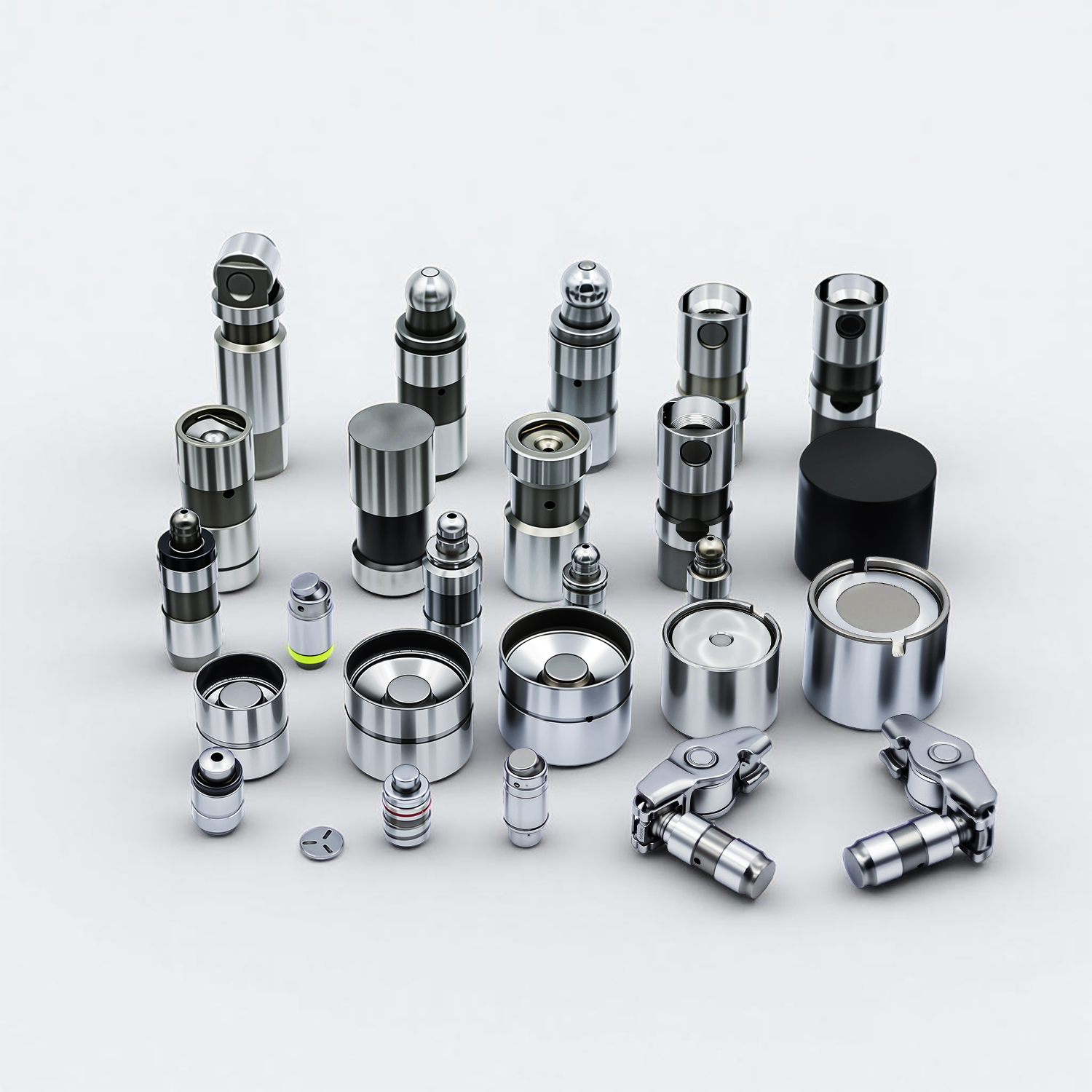
Unlike specialized manufacturers, TOPU produces all three tappet types in one 8,000+ sqm IATF 16949-certified facility:
Product Coverage
Roller Tappets:    550+ part numbers (American, European, Asian applications)
Bucket Tappets:    Direct-acting & shim-over-bucket designs
Flat Tappets:      Hydraulic & mechanical lifter versions
Annual Capacity:   10,000,000+ units
Quality Standard:  100% leak testing (hydraulic), CMM sampling (0.1%)
Validated Applications
GM LS Series: TP-GM roller tappets tested to 500,000 cycles at 0.600" lift
Toyota/Lexus: TP31 bucket tappets validated in 220,000-mile taxi fleet service
Classic V8s: DLC flat tappets proven in 50+ muscle car restorations
This unified manufacturing approach ensures consistent quality whether you're sourcing for Mercedes M112 engines or Honda VTEC applications.
Selection Decision Tree
START: What's your engine architecture?
│
├─ OHV (Pushrod) Engine?
│  ├─ Cam lift > 0.500" OR spring pressure > 300 lbs?
│  │  └─ YES → Roller Tappets (TOPU TP-GM series)
│  └─ NO → Flat Tappets with DLC coating
│
├─ DOHC (Direct-Acting) Engine?
│  ├─ Redline > 7,000 RPM?
│  │  └─ YES → Lightweight Bucket Tappets (TOPU TP31 series)
│  └─ NO → Standard Bucket Tappets
│
└─ Classic Engine (Pre-1985)?
   └─ Using modern oil (API SN/SP)?
      ├─ YES → DLC-Coated Flat Tappets
      └─ NO → Standard Flat Tappets + ZDDP additive
Common Selection Mistakes
Mistake | Consequence | Solution |
|---|---|---|
Flat tappets with aggressive cam | Wiped lobes within 5,000 mi[^6] | Use roller tappets for lift >0.500" |
Mixing tappet types | Uneven wear, valve lash drift | Replace all as matched set |
Ignoring oil compatibility | 60% faster wear with low-ZDDP oil[^4] | DLC coating or ZDDP supplement |
Skipping break-in | Surface damage in first 20 minutes | Follow 2,000 RPM / 20-min protocol |
Contact TOPU for Technical Consultation

TOPU's engineering team provides:
Tappet selection for specific engine applications
Material certifications
Prototype quantities for validation testing
Production volumes with IATF 16949 documentation
Contact Information:
📧 Email: [email protected]
📱 WhatsApp: +86-13862664011
🛒 Products: View Valve Tappets
Manufacturing Credentials:
20+ years valvetrain manufacturing experience
550+ tappet part numbers in stock
10,000,000+ annual production capacity
IATF 16949 & ISO 9001 certified