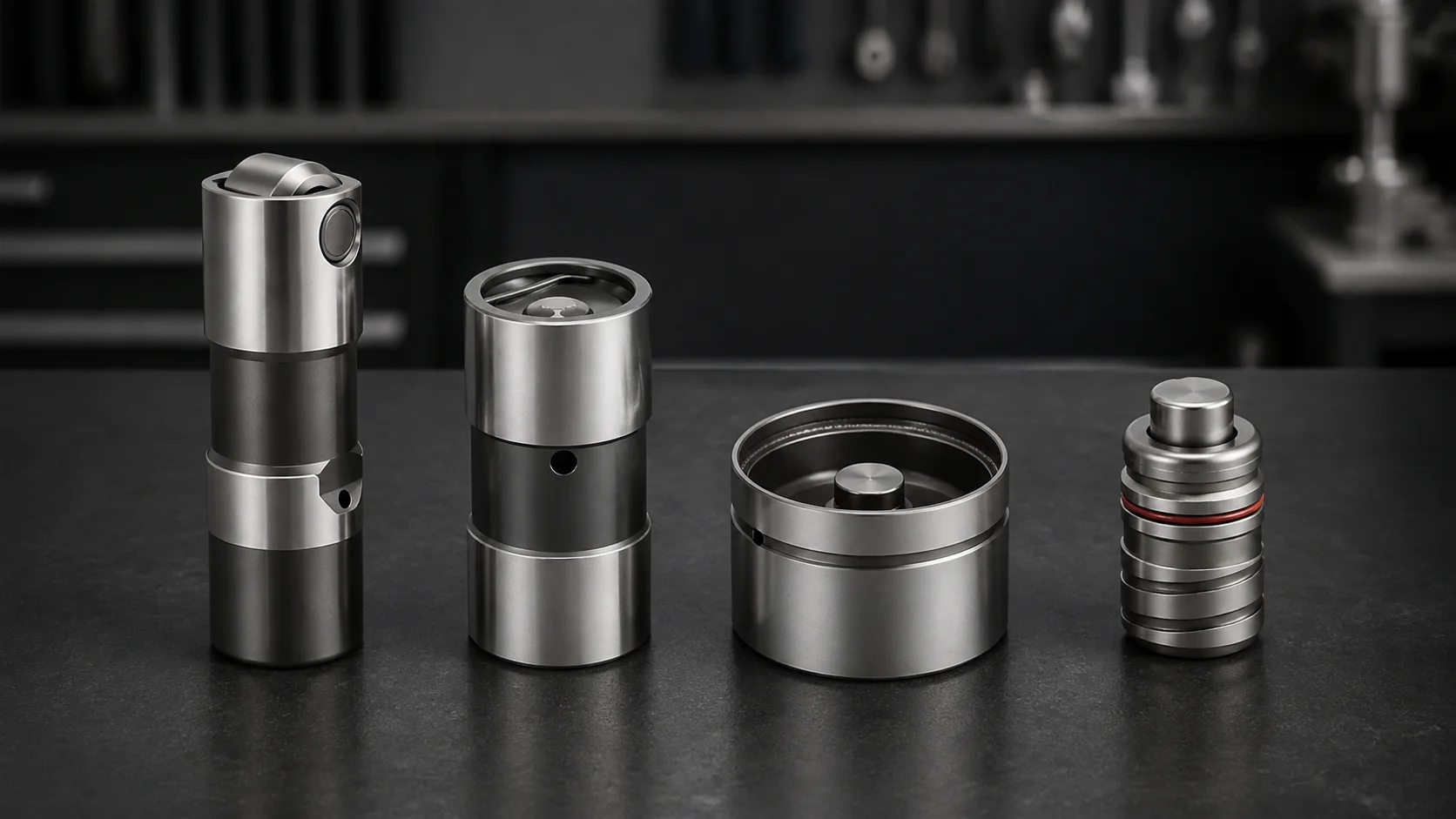
A valve lifter follows the camshaft profile and transfers that movement toward the intake or exhaust valve. Depending on the engine layout, it may act directly on the valve, support a finger follower, or send motion through a pushrod and rocker arm.
The correct lifter helps the valvetrain reproduce the intended valve lift and timing while controlling clearance, contact stress, noise, and wear. For replacement and wholesale programs, correct matching depends on more than appearance. OE number, engine code, dimensions, oil-feed position, working height, and contact design all matter.
TOPU supplies valve tappets and lifters for passenger-car, commercial-vehicle, and aftermarket programs. We review each inquiry against the application and available technical data before quotation.
What Is the Main Job of a Valve Lifter?
The camshaft does not usually open an engine valve by itself. A lifter, tappet, follower, pushrod, or rocker arrangement carries the cam lobe's movement to the valve.
During each camshaft rotation, the lifter must perform several jobs:
Follow the cam profile: The contact surface tracks the rising and falling cam lobe.
Transfer valve lift: It sends the required movement toward the valve without unwanted deflection or lost motion.
Control clearance: A hydraulic element compensates for lash automatically, while a mechanical system uses a specified running clearance.
Maintain stable contact: The lifter, camshaft, pushrod, follower, and valve must remain correctly matched as a system.
Survive repeated loading: The contact face, body, plunger, roller, and oil passages must withstand continuous cycling, lubrication, and temperature changes.
If the lifter loses motion because of wear, incorrect clearance, oil aeration, internal leakage, or an application mismatch, the valve may not follow the intended lift curve. The result can be ticking, reduced lift, rough running, misfire, or accelerated wear elsewhere in the valvetrain.
Are Valve Lifters, Tappets, and Cam Followers the Same?
The terms often overlap, but they do not always describe the same physical part. Vehicle manufacturers, engine builders, and aftermarket catalogs may use different names for components that perform a similar function.
Term | How it is commonly used | Important distinction |
|---|---|---|
Valve lifter | Common in pushrod engines and aftermarket catalogs | May be hydraulic or mechanical, flat-faced or roller-equipped |
Valve tappet | Broad term for a component that follows cam motion | Often used for bucket, flat, hydraulic, or mechanical designs |
Cam follower | Emphasizes the part that follows the cam profile | May be a bucket, finger follower, rocker-mounted roller, or lifter |
Hydraulic lash adjuster | Oil-fed element that maintains valvetrain clearance | May be integrated into a bucket or lifter, or support a separate finger follower |
This is why a product should not be identified from the name alone. The OE reference and engine architecture provide a better starting point than a generic description such as "hydraulic lifter."
Where Is a Valve Lifter Located?
The location depends on the valvetrain layout.
Pushrod or OHV Engines
The lifter sits in a bore in the engine block and follows a camshaft located lower in the engine. It moves a pushrod, which operates a rocker arm and opens the valve. Pushrod lifters may use a flat contact face or a roller and may use either hydraulic or mechanical lash control.
Direct-Acting OHC and DOHC Engines
A bucket tappet sits between the overhead camshaft and the valve stem. This compact layout transfers movement directly toward the valve. The bucket may use a selected thickness, a shim, or an internal hydraulic mechanism depending on the engine design.
Finger-Follower Valvetrains
A hydraulic lash adjuster can support one end of a finger follower while the camshaft acts on the follower's roller or sliding pad. In this layout, the lash adjuster controls clearance but is not necessarily the cam-contact component.
For more application examples, see Where Are Valve Tappets Used in Modern Engines?.
How Valve Lifter Types Are Classified
Hydraulic, mechanical, roller, flat, and bucket are not five mutually exclusive categories. They describe different aspects of the design.
Design question | Main options | What it changes |
|---|---|---|
How is valve lash controlled? | Hydraulic or mechanical | Noise, maintenance, preload or lash requirements, and oil sensitivity |
How does the part contact the cam? | Sliding/flat face or roller | Friction mode, cam compatibility, surface requirements, and anti-rotation needs |
Where is it used? | Pushrod lifter, direct bucket, or finger-follower support | Working height, oil-feed location, seat geometry, and surrounding components |
Is the contact surface treated? | Base material, nitrided, phosphated, DLC-coated, or another specified process | Wear behavior and suitability for the confirmed application |
A hydraulic roller lifter, for example, combines hydraulic lash control with roller contact. A mechanical bucket tappet combines manually controlled clearance with a direct-acting bucket layout.
For a deeper comparison of roller, flat, and bucket designs, use TOPU's engine lifter selection guide. Final selection must still follow the engine and camshaft specification.
How Does a Hydraulic Lifter Work?
A hydraulic lifter or lash adjuster uses engine oil and an internal plunger assembly to take up clearance in the valvetrain.
When the cam is on its base circle and the valve is closed, oil enters the hydraulic element and positions the plunger to remove free clearance. As the cam begins to lift, the internal check valve and high-pressure chamber allow the element to behave as a load-carrying link. Controlled internal leakage then allows the element to accommodate gradual changes caused by temperature and wear.
This function depends on the complete oil and valvetrain system. Oil condition, oil aeration, feed pressure, internal leakage, plunger movement, preload, and engine geometry can all affect operation. SAE research on hydraulic lash adjuster dynamics also treats check-valve behavior and oil aeration as part of the system response.
A hydraulic lifter should therefore be matched and diagnosed as a precision hydraulic component, not simply as a metal cylinder of similar diameter.
Common Valve Lifter Failure Signs
One symptom does not confirm one cause. Use the sound pattern, oil condition, engine data, and physical inspection together.
Symptom | Possible lifter-related cause | What to review next |
|---|---|---|
Ticking after a cold start | Delayed oil filling, drain-down, contamination, or internal leakage | Correct oil level and grade, filter condition, oil pressure, and whether the noise disappears warm |
Constant ticking when warm | Wear, sticking plunger, incorrect lash, damaged roller, or cam wear | Localize the noise and inspect the lifter, cam lobe, pushrod or follower |
Rough idle or misfire | Lost valve lift, collapsed hydraulic element, or another valve-sealing problem | Fault codes, compression or leak-down results, and valvetrain movement |
Pitting, scuffing, or metal transfer | Lubrication failure, surface damage, cam mismatch, or incorrect break-in | Cam lobe condition, oil supply, contact pattern, and related parts |
Repeated failure after replacement | Root cause was not corrected or the application was mismatched | Oil circuit, camshaft, lifter bore, preload or lash, spring condition, and OE reference |
Installing a new lifter against a damaged cam lobe can quickly damage the replacement. The camshaft, pushrod, rocker or follower, valve spring, oil passages, and lifter bore should be reviewed as part of the repair.
For a step-by-step diagnostic sequence, see How to Troubleshoot Hydraulic Lifter Problems.
Why Similar-Looking Lifters May Not Interchange
Two lifters can share a similar outside diameter and still have different internal or working geometry. A reliable match may require confirmation of:
OE number and alternate references.
Vehicle, engine code, model year, and market.
Hydraulic or mechanical lash design.
Roller, flat-face, bucket, or follower arrangement.
Body diameter, overall height, and working or seat height.
Oil-feed hole position and oil-groove layout.
Plunger travel, preload range, or specified lash.
Pushrod seat or follower contact geometry.
Camshaft compatibility and anti-rotation design where applicable.
Material, heat treatment, coating, and contact-face finish.
If the OE reference is unavailable, TOPU can review a dimensioned drawing or an approved sample. Feasibility, tooling, testing, MOQ, and lead time are confirmed after the application review rather than assumed from appearance.
Representative TOPU Valve Lifter Applications
The examples below show why the OE number and engine family should remain attached to the inquiry.
TOPU example | Application reference | Best use of the link |
|---|---|---|
Toyota/Lexus references including 13750-75020, 13750-31030, 13750-0Y010, and 13750-0V030 | Review the listed OE references, then send the engine code and required quantity | |
OE 11 33 7 549 633 / 0942.G2 for listed N12, N13, N14, and N16 applications | Confirm the exact engine and vehicle application before quotation | |
OE 038 109 309 C for listed Volkswagen applications | Use the OE reference as the starting point for application and range matching |
These product pages are application examples, not a universal interchange statement. Send the complete OE list when a program includes several engine families or vehicle brands.
How TOPU Supports Valve Lifter Programs
TOPU's current valve tappet range covers hydraulic, mechanical, roller, flat, bucket, truck, and performance-related designs across more than 550 listed models. Support can include:
OE-number and engine-code matching.
Drawing or approved-sample review for custom requirements.
Dimension, working geometry, oil-feed, and surface-process review.
Functional and leak testing for applicable hydraulic designs.
Sample confirmation before a bulk program.
Neutral, branded, or project-specific packaging discussion.
Mixed-SKU carton and export-order planning where available.
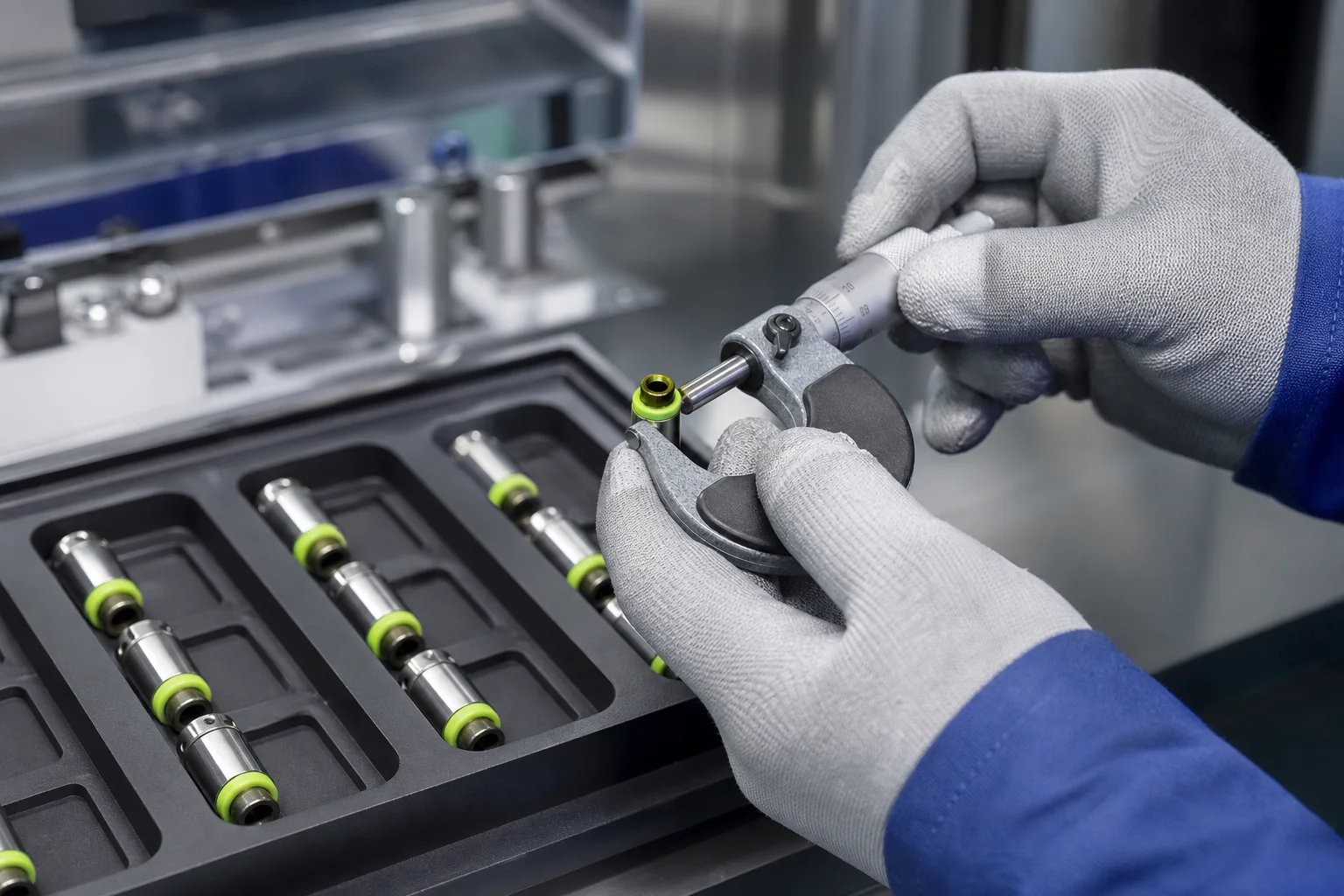
Valve lifter matching combines the OE reference with dimensional, functional, and application checks.
Available inspection records, packaging options, sample timing, MOQ, and production lead time are confirmed for the specific item and order. This keeps the quotation tied to the actual application rather than a general product-family claim.
Frequently Asked Questions
Is a valve lifter the same as a tappet?
The terms often overlap in automotive catalogs. "Lifter" is common for pushrod-engine components, while "tappet" may also describe bucket and direct-acting designs. The OE number and engine layout are more reliable than the generic name.
What is the difference between hydraulic and mechanical lifters?
A hydraulic lifter uses engine oil and an internal plunger to maintain working clearance. A mechanical lifter uses a specified valve lash that must be set according to the engine or camshaft procedure.
Can a hydraulic lifter also be a roller lifter?
Yes. "Hydraulic" describes the lash-control method, while "roller" describes the cam-contact method. A lifter can use both features.
Can only one failed lifter be replaced?
That depends on the engine, access, wear pattern, and repair procedure. Before replacement, inspect the camshaft and related valvetrain parts and follow the engine manufacturer's service information. Replacing one part will not correct an oil-supply or cam-wear problem.
What causes a valve lifter to tick?
Possible causes include low or contaminated oil, delayed filling, internal leakage, incorrect lash or preload, sticking, roller or contact-face wear, camshaft damage, and an incorrect application match. The noise pattern should be diagnosed before parts are ordered.
What should I send for a valve lifter quotation?
Send the OE number, engine code, vehicle application, lifter type if known, expected quantity, destination market, packaging requirement, and any sample or document requirements. Photos and dimensions help when the reference number is unavailable.
Send TOPU Your Valve Lifter List
TOPU supports valve lifter and tappet programs for distributors, engine rebuilders, aftermarket brands, and development projects. Send us your OE references, engine codes, annual or order quantity, destination market, and packaging requirements. Our team will identify available matches and flag any item that needs a drawing or sample review before quotation.
Send your OE-number list to TOPU for application review and quotation.