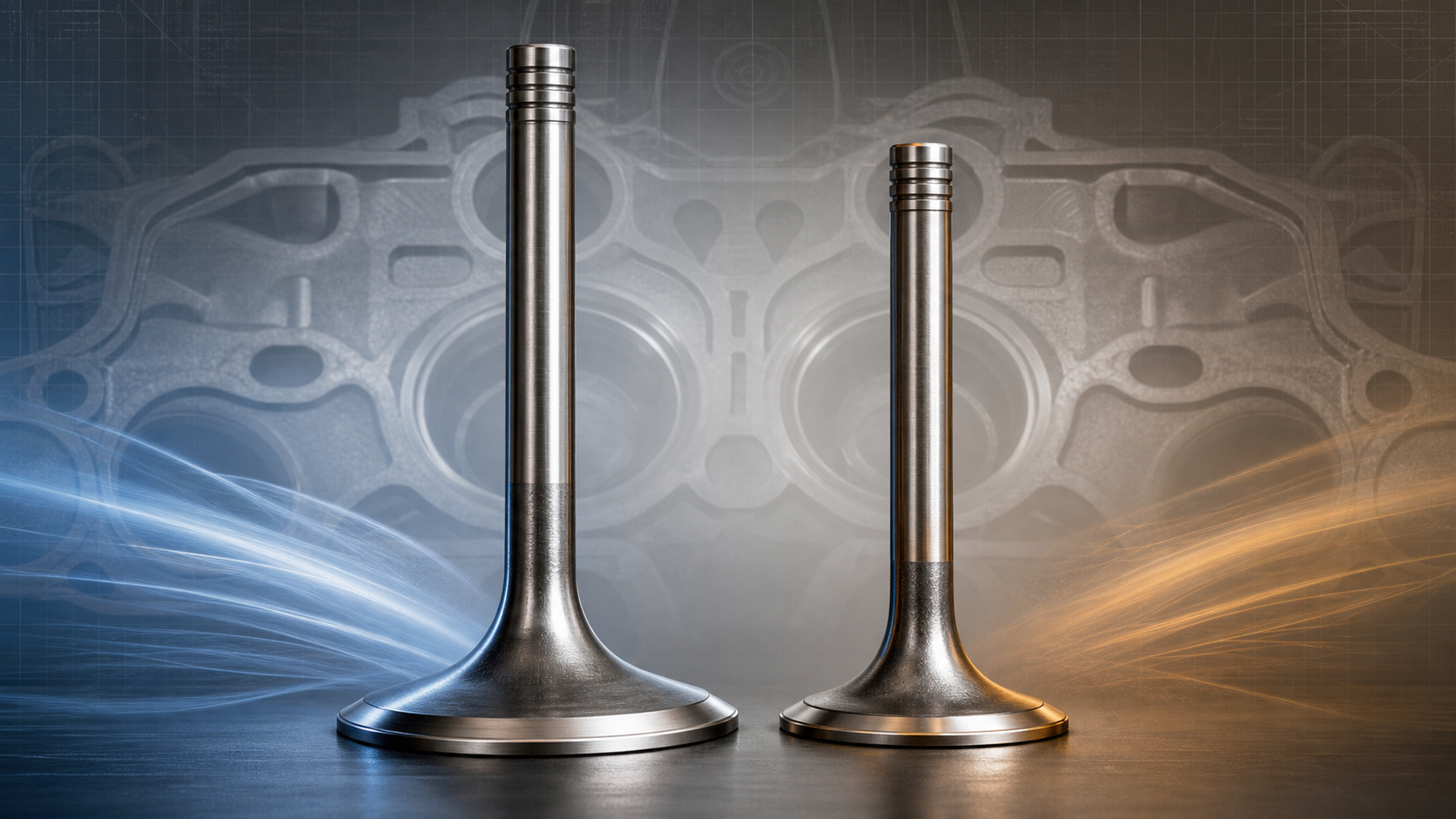
An intake valve lets fresh air or an air-fuel charge enter the cylinder. An exhaust valve releases burned gases after combustion. Both are engine valves, but they are not interchangeable in material, size, or working conditions.
If you source parts for engine rebuilds or distribution programs, this distinction matters. The wrong material, valve position, or application match can lead to poor sealing, burned valves, compression loss, or repeat repair claims.
Engine repair and performance references such as MotorTrend often discuss the higher thermal load on exhaust valves compared with intake valves. That is why exhaust valve metallurgy usually receives closer attention in high-heat applications.
Intake Valve vs Exhaust Valve at a Glance
Factor | Intake valve | Exhaust valve |
|---|---|---|
Main job | Allows fresh air or air-fuel mixture into the cylinder | Releases hot combustion gases |
Typical thermal load | Lower, cooled by incoming charge | Higher, exposed to exhaust gas heat |
Common size trend | Often larger head diameter for airflow | Often smaller head diameter but higher heat resistance |
Material priority | Wear resistance, stem strength, cost efficiency | Hot strength, corrosion resistance, seat durability |
Common failure mode | Carbon buildup, bending, guide wear | Burning, face erosion, stem wear, tuliping |
These differences are common in many engines, but final valve design still depends on engine type, fuel, turbocharging, duty cycle, and OEM specification.
Temperature and Operating Conditions
The intake valve is exposed to incoming air or an air-fuel mixture. That flow helps remove heat from the valve head. Because of this cooling effect, many intake valves can use martensitic stainless steel or other application-specific steel grades.
The exhaust valve works in a harsher environment. It opens into hot combustion gases and receives less cooling from fresh intake flow. In demanding applications, exhaust valves may use austenitic heat-resistant alloys, bimetallic construction, hard-facing on the seat area, or other heat-resistant designs. If you are comparing steel grades and heat-resistant valve materials, you can also review TOPU's engine valve materials guide.
For this reason, a clear RFQ should not only say "engine valve." It should identify the intake or exhaust position, engine model, material requirement, and any coating or hard-facing requirement.
Why Intake Valves Are Often Larger
Many cylinder heads use a larger intake valve because filling the cylinder is harder than emptying it. The piston must draw air into the cylinder, so more valve area helps support airflow.
Exhaust gas leaves under pressure after combustion, so the exhaust valve can often be smaller while still clearing the cylinder. However, the exhaust valve must survive much higher heat and more corrosive gas exposure.
This size difference is not universal across all engines, but it is common enough that you should verify valve head diameter, stem diameter, keeper groove, face angle, and seat width before ordering.
The same distinction matters during troubleshooting. The intake valve controls airflow at the cylinder head, but the engine air filter sits earlier in the intake path. If reduced airflow comes from a clogged or poorly matched filter, changing the valve will not solve the problem. For filter-specific replacement programs, Hifine's car air filters covers automotive filter options and OEM-style supply programs; for valve-side airflow, sealing, and material questions, continue with the valve specifications below.
Material and Surface Treatment Differences
Common valve specifications may include steel grade, stem chrome plating, nitriding, bimetallic friction welding, or seat hard-facing. These details matter because the stem, tip, and valve face do not experience the same type of stress.
Requirement | Why you should check it |
|---|---|
Steel grade | Confirms the valve is suitable for intake or exhaust heat |
Stem diameter and finish | Affects guide fit, oil control, and wear |
Seat face treatment | Helps maintain sealing under repeated impact |
Tip hardness | Reduces wear from rocker arm or tappet contact |
Lot traceability | Helps manage warranty and batch follow-up |
When sourcing intake and exhaust valves, ask for the OE number, engine application, material grade, sample availability, and inspection documentation.
If you already have an exact OEM reference, the next step is to confirm a matching product page and application data.
TOPU Product Examples by Valve Position
Use the valve position and OE reference together when checking a replacement valve. These examples show how TOPU organizes intake-only, exhaust-only, and paired intake/exhaust valve applications.
What you need to confirm | TOPU product example |
|---|---|
Intake valve for a small passenger-car engine | |
Exhaust valve by Honda OE reference | |
Paired intake and exhaust valve kit | Toyota Camry / 4Runner 3.0L DOHC Valve Kit 1371562030 / 1371562050 |
VW/Audi EA888 Gen2 intake and exhaust valve set |
Source Engine Valves From TOPU

If you need intake valves, exhaust valves, valve lifters, tappets, or related valvetrain parts for rebuild or distribution projects, TOPU can support application review and bulk sourcing. Share your application list, target quantity, and document requirements so the valve material, fitment details, and packaging plan can be reviewed before quotation.