What is a Solid Mechanical Lifter?
A mechanical lifter is a solid, one-piece cylinder that transfers motion directly from the camshaft lobe to the pushrod (or rocker arm). No internal hydraulics, no oil cushion — just metal riding on metal. That simplicity is the whole point: with nothing to compress or delay the motion, the valve follows the cam profile exactly, even at 7,000+ RPM.
The trade-off is maintenance. Because mechanical lifters can't self-adjust, a specific clearance gap (valve lash) must be set between the rocker arm and valve stem — typically 0.010–0.020 inches. As components wear, the gap widens and needs resetting every 20,000–40,000 miles. Skip the adjustment, and you lose valve lift, power, and eventually valve seat integrity.
Mechanical Lifter vs Hydraulic Lifter Applications
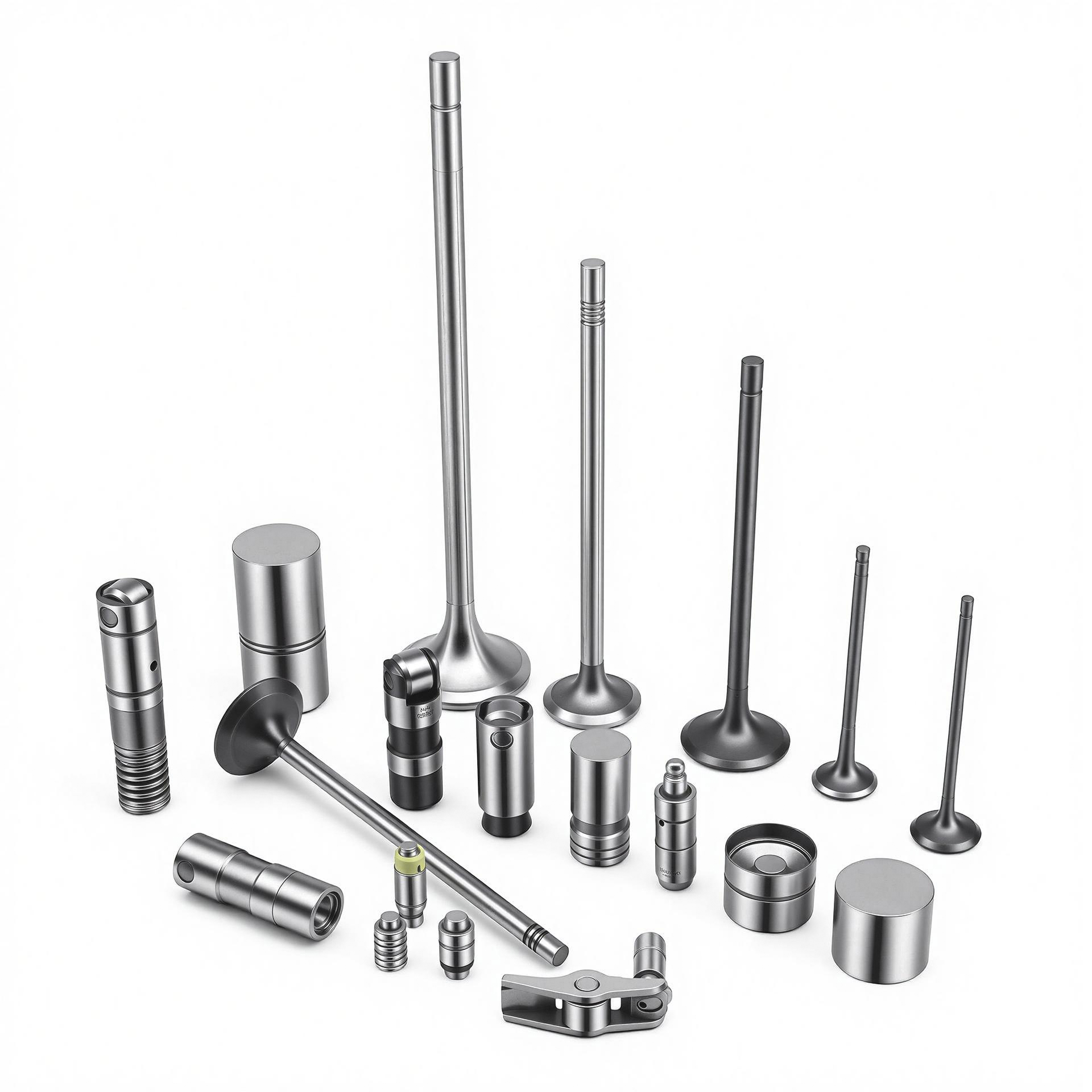
When Mechanical Wins
Race engines and high-performance street builds almost universally run mechanical lifters. Zero hydraulic delay means valve timing stays dead-accurate at extreme RPM. Solid construction handles aggressive valve springs without pump-up (where hydraulic lifters trap oil and hold a valve partially open). And cost-per-unit is lower — $5–15 each versus $15–40 for hydraulic equivalents.
When Hydraulic Wins
For daily drivers that rarely see 5,500 RPM, hydraulic lifters are the practical choice. They self-adjust, run quietly, and never need a feeler gauge.
Quick Comparison
Mechanical | Hydraulic | |
|---|---|---|
Adjustment | Manual, every 20k–40k mi | Automatic |
Noise | Audible tick (normal) | Quiet |
High-RPM Stability | Excellent | Limited |
Maintenance | Regular | None |
Cost | Lower | Moderate |
Step-by-Step Valve Lash Adjustment Guide
Prep Work
Let the engine cool completely — overnight is ideal. Valve clearances are specified at cold temperatures because thermal expansion changes everything. Gather feeler gauges in the correct sizes, an adjustment wrench, and a socket to rotate the crankshaft. Remove the valve covers and visually inspect the valvetrain for damage before touching anything.
The Adjustment Process
Rotate the crank to bring cylinder #1 to TDC on the compression stroke (both valves fully closed). Slide the appropriate feeler gauge between the rocker arm tip and valve stem — it should drag through with light resistance, not loose and not pinched. If the gap is off, loosen the lock nut, turn the adjustment screw until the feeler gauge feels right, retighten the lock nut, then re-check — tightening almost always shifts the setting slightly.
Work through the remaining cylinders in firing-order sequence, rotating the crank to TDC compression for each. Typical cold specs: 0.010–0.012 in. intake, 0.012–0.014 in. exhaust. Always defer to the camshaft manufacturer's spec if running an aftermarket cam.
Common Mistakes
Adjusting on a warm engine gives wrong readings. Using worn or dirty feeler gauges introduces error. Forgetting to re-check after tightening the lock nut wastes the entire effort. Take your time — a proper four-cylinder adjustment takes about two hours the first time.
Maintenance & Troubleshooting
Oil Matters
Engines with mechanical lifters and flat-tappet cams need oil with elevated ZDDP (zinc) content to protect the high-pressure lobe-to-lifter contact. Standard modern oils have reduced zinc for catalytic converter longevity, so look for oils labeled "classic car" or add a ZDDP supplement. Change oil every 3,000–5,000 miles — the higher contact stress generates more wear particles than hydraulic systems.
Break-In Protocol
New cam-and-lifter sets demand careful break-in: high-ZDDP oil, immediate 2,000–2,500 RPM for 20–30 minutes (no idling), then drain and refill. Change oil again at 500 miles. Skipping this step is one of the fastest ways to destroy a fresh camshaft — and a frequent complaint parts suppliers hear from first-time builders.
Noise & Power Loss
Excessive ticking means lash has drifted past spec — readjust. If noise persists after a proper adjustment, inspect rocker arm tips, valve stem tips, and lifter faces for wear. Power loss usually points to either too-wide clearances (less lift) or too-tight clearances (valve not closing fully, compression loss). Both are solved by measuring and correcting.
Sourcing Quality Mechanical Lifters: Why Choose TOPU?
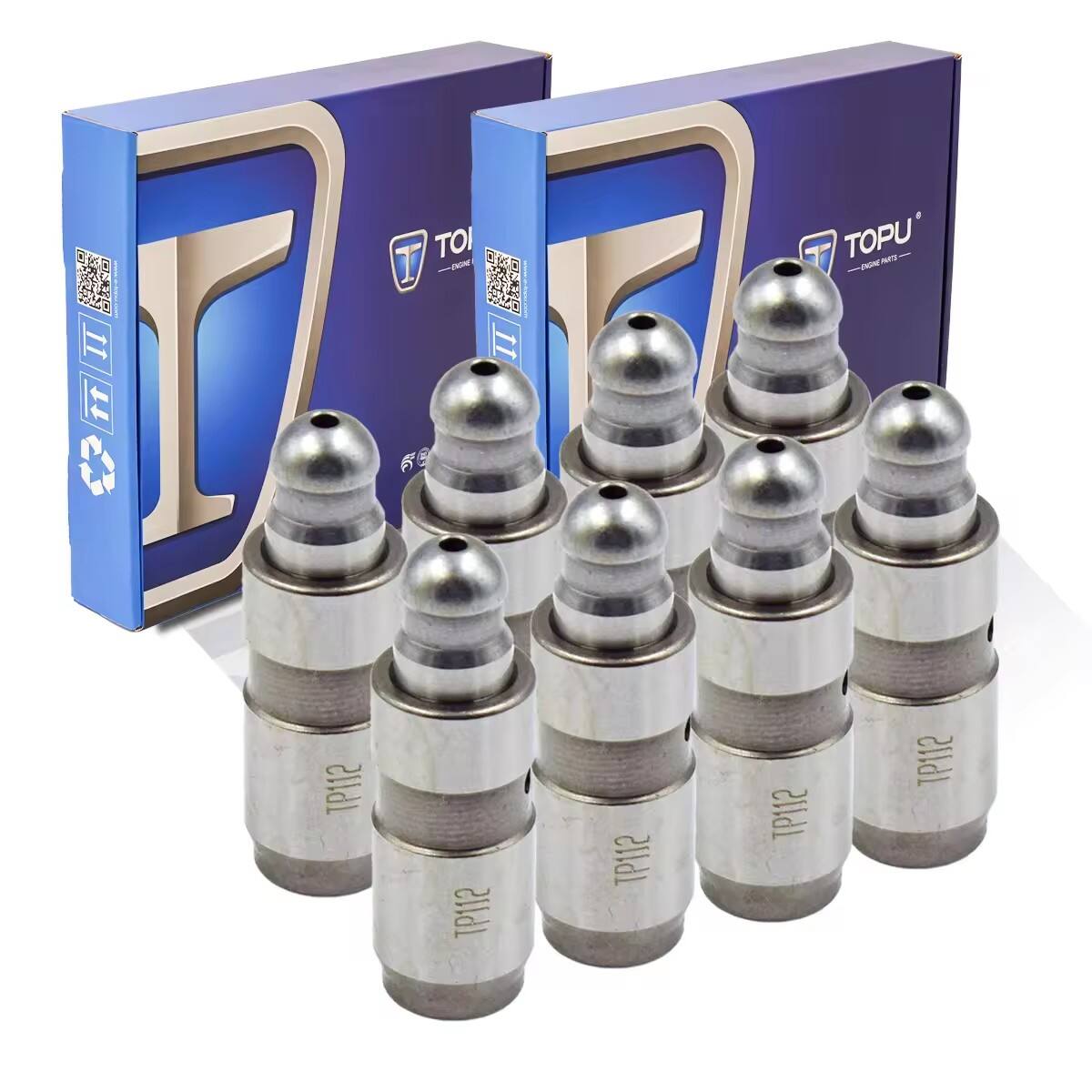
When replacing worn lifters or building a high-performance engine, the quality of your valvetrain components dictates reliability. As a leading manufacturer of engine components, TOPU delivers precision-engineered mechanical lifters designed to withstand extreme RPMs and high-stress environments.
OEM & Aftermarket Excellence: With years of manufacturing expertise, TOPU provides parts that meet or exceed stringent OEM specifications.
Premium Materials: Our solid lifters are crafted from hardened, high-grade steel and precision-ground to ensure exact valve lash maintenance and minimize wear.
Complete Valvetrain Solutions: Beyond mechanical lifters, TOPU is a trusted supplier of hydraulic lifters, roller lifters, camshafts, and engine valves, ensuring perfectly matched components for your engine build.
Whether you're a wholesale distributor, an engine builder, or a performance enthusiast, sourcing directly from TOPU guarantees high quality, competitive pricing, and reliable performance. Explore our Mechanical Lifters to find the exact fit for your specific engine requirements.