If you are a parts distributor, an engine rebuilder, or a major auto shop manager, engine valves probably seem like incredibly simple pieces of steel. They are designed to plug a hole and let air in and out. How complicated could the metallurgy possibly be?
The answer: terrifyingly complex. A modern exhaust valve is thrust into the most violently contradictory environment on planet earth. The bottom half of the valve is blasted with 800°C (1,472°F) supersonic fire from the engine's explosion. The top half of the valve, however, sits outside the fire, where it is aggressively smashed thousands of times a minute by the heavy steel rocker arm.
There is absolutely no single affordable steel alloy on earth that can simultaneously survive melting in that extreme fire and survive the brutal mechanical friction at the top. The brilliant engineering solution that powers the entire modern automotive industry? Bimetallic engine valves.
The Flaw of "One Piece" Valves
To understand why a bimetallic valve is genius, you have to understand why standard one-piece valves fail in high-performance or heavy-duty environments.
If a cheap factory builds an exhaust valve entirely out of heat-resistant steel (like Austenitic 21-4N or SUH35), the valve head easily survives the intense 800°C fire. However, Austenitic steel is inherently highly "soft" and cannot be hardened. Within a few thousand miles, the valve tappet aggressively hammering on the top of the soft valve stem will chew the metal into powder, destroying the valvetrain.
Conversely, if the factory makes the entire valve out of super-hard, friction-resistant Martensitic steel, the top of the stem survives beautifully. The bottom of the valve, however, cannot handle the extreme thermal shock. The 800°C fire will melt the valve face, warping it permanently and causing an immediate violent misfire.
What is a Bimetallic Exhaust Valve?
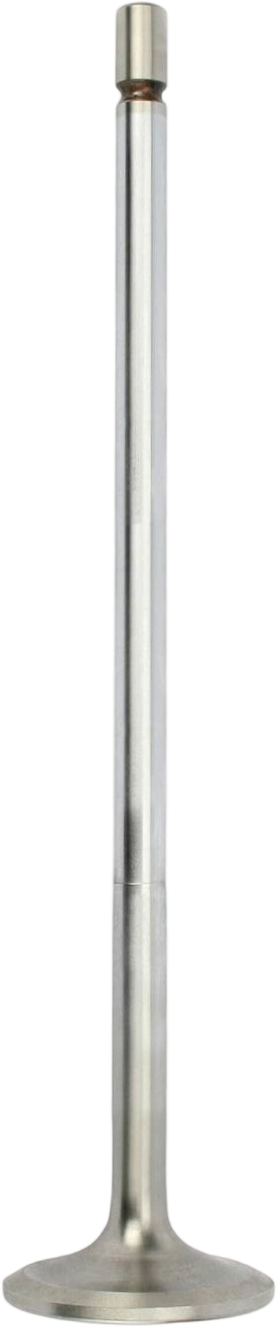
Elite auto parts factories solve this physics problem by creating a Frankenstein component. A bimetallic exhaust valve is literally two completely different pieces of steel, physically smashed and melted together to create a single, perfect part.
The factory grabs a rod of exceptionally tough, fiercely hard Martensitic steel (to act as the upper valve stem). Then, they grab a rod of outrageously expensive, heavily heat-resistant Austenitic 21-4N super-steel (to act as the bottom valve head).
By uniting these two metals, the valve gets the absolute best of both worlds. The bottom effortlessly shrugs off the violent combustion fire, while the top stem glides brilliantly through the valve guide without wearing down, taking maximum abuse from the heavy valve springs.
The Magic of Friction Welding Engine Parts
How do you permanently attach two completely different steel alloys together so strongly that they will not snap at 7,000 RPM? You cannot simply use a blowtorch or arc welder. You must use robotic friction welding.
Friction welding is one of the most violent and visually stunning processes inside an OEM factory. The robotic machinery holds the hard steel stem in a massive chuck and spins it at thousands of revolutions per minute. Extremely quickly, a massive hydraulic ram violently forces the spinning stem directly against the stationary, heat-resistant valve head.
The intense, screaming friction between the spinning metal and the stationary metal generates so much rapid heat that both pieces instantly melt. Because no external gas or welding wire is used, the molecules of the two steels physically interlock and fuse together permanently. The resulting weld is frequently structurally stronger than the original raw steel itself.
Upgrade Your Inventory with True Bimetallic Technology
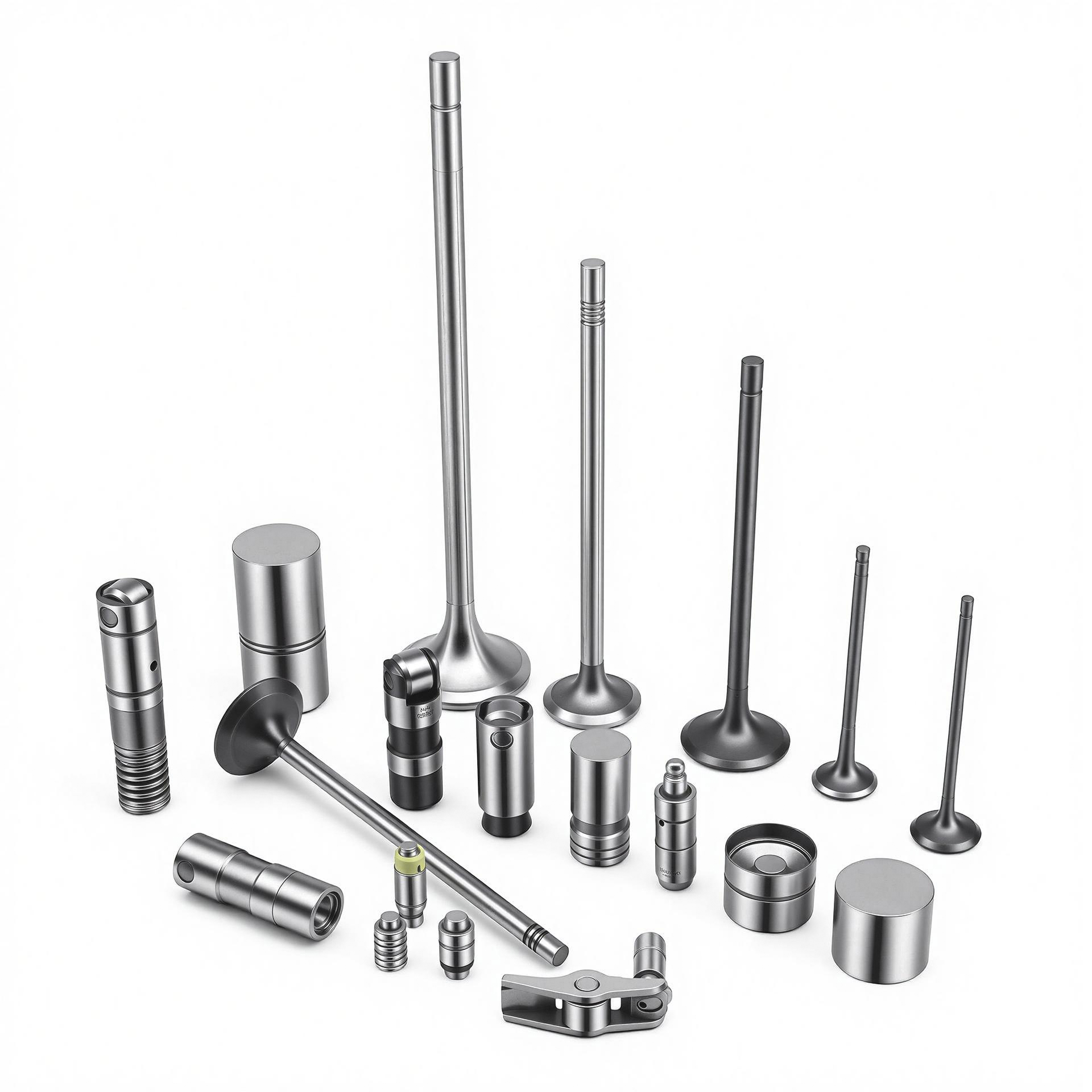
Stocking cheap, mono-metal exhaust valves for high-stress turbo or commercial diesel applications is a guaranteed path to catastrophic warranty failures. Your buyers demand parts engineered for the apocalypse.
TOPU is a premium IATF 16949 officially certified valvetrain factory specializing heavily in OEM-grade bimetallic engine valves. Operating massive, automated robotic friction welding lines in-house, we flawlessly merge high-hardness stems with extreme-heat 21-4N and Inconel heads.
From advanced plasma Stellite facing to deep continuous carburizing on our custom lifters, we deliver uncompromising heavy-duty valvetrain performance to tier-1 automotive racing teams and massive distribution networks globally. Contact TOPU today to discuss upgrading your wholesale engine catalog with verified bimetallic technology.